


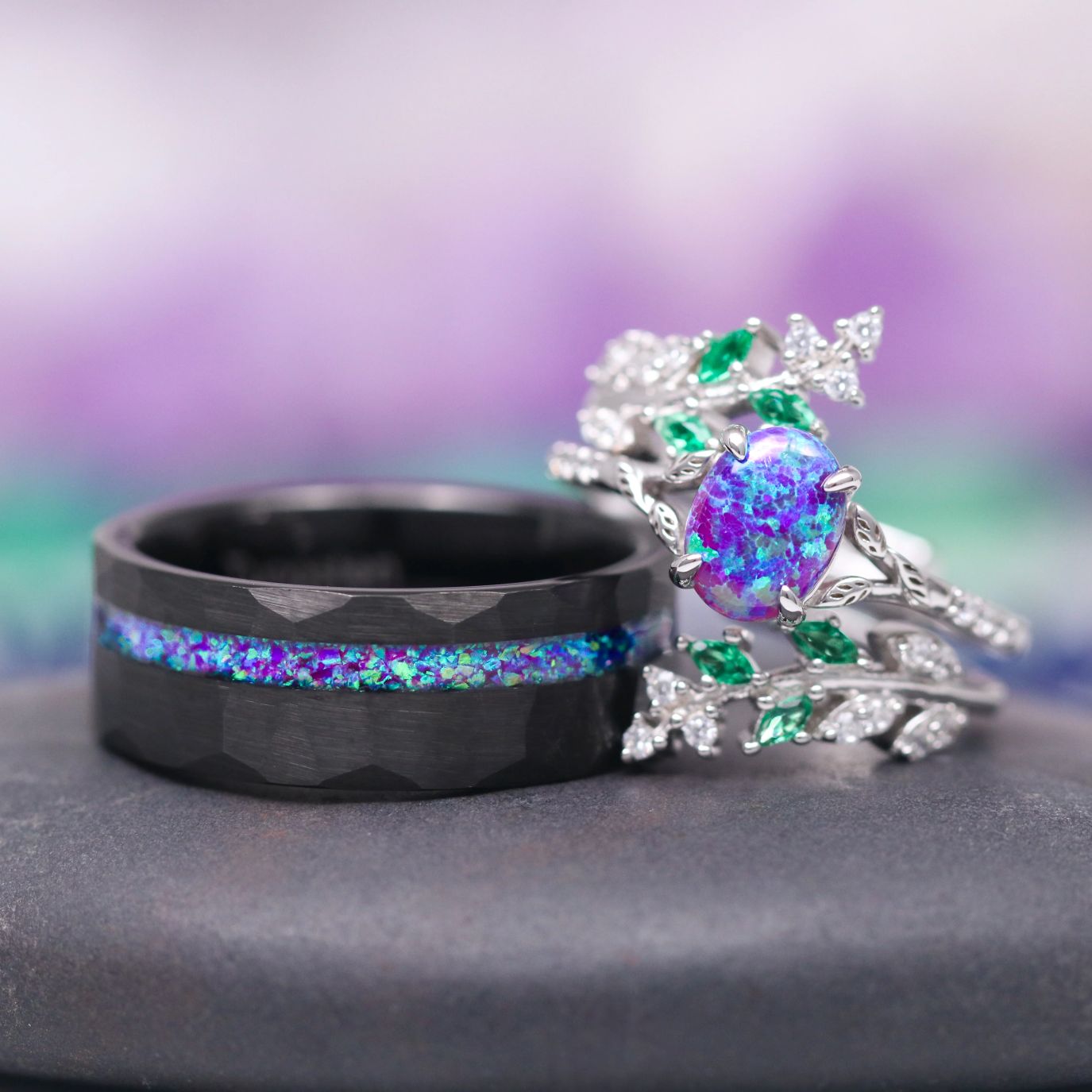
A shared stone is the most personal way to connect two rings, because unlike metal or finish it can carry personal meaning as well as add to the look of the ring. When using a shared stone to connect two rings, the obvious approach is to use the same stone in the same setting. But the rings don’t need to be identical to feel connected. A more interesting approach is to use the same stone in both rings while varying the setting, metal, band width or finish.
Why a stone is a good connection
Metal tone and finish are aesthetic decisions. A stone can be chosen for a birth month, a place, a colour that means something to the couple, or simply because both people liked it creating a personal connection between the two rings. It’s a subtle detail that may only be noticeable up close, making it ideal for couples who want their rings to feel connected without looking identical.
Setting is where the two rings separate
The same stone can look completely different depending on how it is set. A flush setting places the stone level with the surface of the band, creating a subtle pop of colour. A bezel setting surrounds the stone with metal, giving it more definition while also offering protection. A raised setting makes the stone more prominent and a focal point of the ring. Choosing different settings allows couples to use the same stone while creating two distinctly different rings.
One stone family, two different treatments.
Scale is the other variable
Stone size can also help distinguish the two rings. If you choose different sizes, make the difference noticeable so it feels intentional. For example, one ring could feature a larger stone as a focal point, while the other uses a smaller version of the same stone as an accent. If the stones are only slightly different in size, the effect may be less intentional.
Practicality usually differs between the two people
Lifestyle and daily activities should also factor into the setting. Someone who works with their hands or rarely removes their ring may prefer a flush or bezel setting, which offers the stone more protection. A raised setting may be better suited to someone who wants the stone to be more prominent and is comfortable with a ring that may require a little more care. Choosing different settings allows both rings to suit the person wearing them while the shared stone keeps them connected.Makers who state setting type plainly, Aquamarise among them, make that easy to check before ordering.
Buying the stones together matters
Natural stones can vary in colour, tone and saturation, so two stones of the same type may not look exactly alike. If you want the stones to create a visible connection between the rings, choose them together and look for stones that complement each other. This can be particularly important with coloured gemstones, where differences in shade may be more noticeable.
Making the Rings Your Own
The stone can be the element that connects the two rings, while almost everything else can be customized to suit each person. The setting, band width, shape, finish and even the metal can be different. Stone size can vary too, particularly when the difference is intentional. The result is two individual rings with one meaningful detail in common.
Where to see it done properly
This approach is easier when shopping with a jeweller that offers the same stone across a variety of ring designs. Looking through couple wedding rings built this way shows the mechanism clearly: a single material appearing in a protected setting on one band and more prominent one than the other, with the connection obvious with two unique rings.
A Meaningful Connection
Using the same metal or finish can create a visual connection between two rings, but a shared stone can add another layer of meaning. Whether it represents a birth month, a special place, a favourite colour or simply something you both love, it can make two very different rings feel connected in a way that is personal to you.