

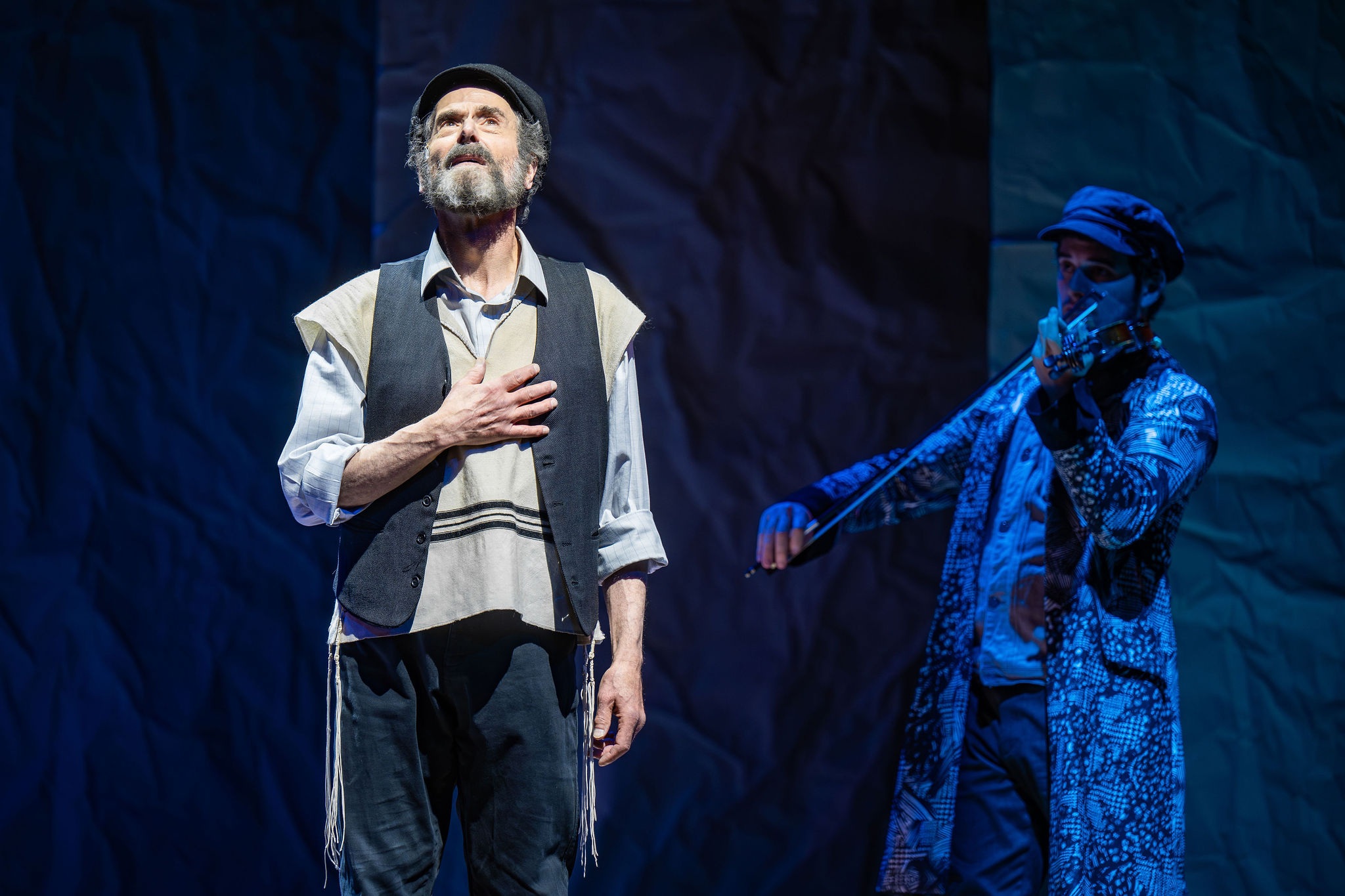
Few musicals are as universally recognized as Fiddler on the Roof, yet this acclaimed revival invites audiences to experience the beloved story in an entirely new way. Presented by the Harold Green Jewish Theatre Company, Fiddler On The Roof In Yiddish returns the musical to the language that would have been familiar to Tevye and his family.
Directed by Tony and Academy Award winner Joel Grey and featuring Tony Award nominee Steven Skybell as Tevye, the production is performed entirely in Yiddish with English and Russian subtitles – a return to the language of Sholom Aleichem’s original Tevye stories. For Grey, the language itself is part of the magic:
“There is something profoundly moving about hearing Fiddler in Yiddish,” said Grey. “The language carries history, humour, sorrow and resilience all at once. Like hearing opera in its original tongue, it deepens every moment. It allows the story to breathe with emotional truth.”
Fiddler On The Roof In Yiddish: The Details
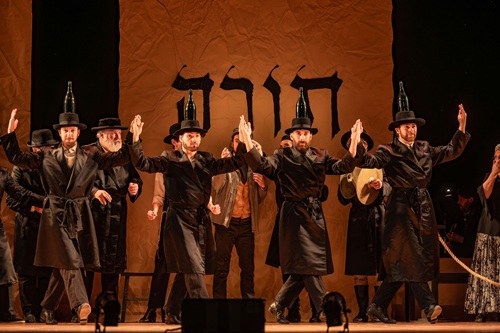
- It is a limited engagement, on until June 7th, 2026
- Location: The Elgin Theatre, 189 Yonge Street, Toronto
- Running Time: Three hours including one intermission
- Tickets: hgjewishtheatre.com
The Story
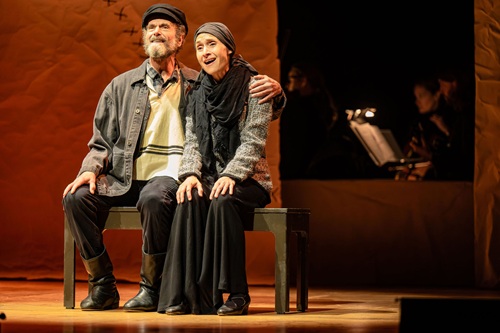
Set in 1905 in the fictional Jewish village of Anatevka, Fiddler on the Roof In Yiddish follows Tevye, a dairyman struggling to maintain his family’s traditions amid a rapidly changing world. As his daughters challenge long-held customs and seek to marry for love, Tevye must reconcile his deeply held beliefs with shifting social realities. Against a backdrop of political uncertainty and growing antisemitism in Eastern Europe, the story explores faith, family, resilience, and the tension between tradition and change.
The Review
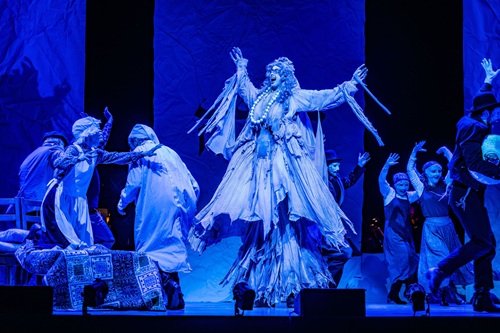
I have a confession to make. I am the only Jewish person I know that has never seen Fiddler On The Roof. I haven’t seen the movie. I haven’t seen the stage play. I haven’t even listened to the album. I didn’t even know very much about the story. Of course, I knew some of the songs but had no context for them.
Seeing Fiddler On The Roof In Yiddish felt like reconnecting to my family’s history. In many ways, this wasn’t just Tevye’s story; it was my family’s story too. My grandfather grew up in a shtetl in Lithuania, escaping to Canada before the Bolshevik Revolution in 1918. He survived pogroms. He was only 13 when he came to Canada. His village was destroyed eventually. Listening to the musical in Yiddish reminded me of hearing my grandfather and my great uncles playing gin together as we sat upstairs and listened to them.
My parents used to speak in Yiddish while I was growing up if they didn’t want my sisters and me to know what they were saying. Eventually, we could figure some of it out. My sister would always sing “Tradition” near a holiday when I asked why we had to do this or that. My father would sing “If I Were A Wealthy Man” as I rolled my eyes. My mother would get teary-eyed if she heard “Sunrise, Sunset”. Seeing it for myself finally brought to life these moments for me.
I went with my friends – a married couple – one Jewish, and the other not. It was their story too in so many ways. At the end, they both had tears in their eyes. My Jewish friend had always pressured me to see it. Maybe, the first time seeing the play, it was meant to be in this language that is so much a part of me. His husband cried because the themes of family, love, and sorrow are universal. The idea of having to be exiled from a village, but knowing that you have a homeland to go to is a theme that resonated so much for me.
There wasn’t a cast member who wasn’t special. Steven Skybell, who was nominated for a Tony Award for the Broadway show, was magical as Tevye. The Texas native had a huge role, and he brought a strength, stubbornness, and devotion to the character that transcends language. He didn’t just play Tevye – he embodied the character.
Tracy Michailidis as Golde is also a stand out bringing comedic timing and compassion to her role as the traditional matriarch. The main players and supporting cast never stumbled with the complexity of Yiddish. They embraced the expressive language and if you close your eyes, you can imagine that you were in Anatevka with them. The dancing was impeccable requiring technical precision while still staying true to the story. The staging itself was sparse, but that effectively communicated the characters’ poor, precarious lives in the shtetls of Eastern Europe.
Final Thoughts and Tips To Getting the Most Out of Your Experience
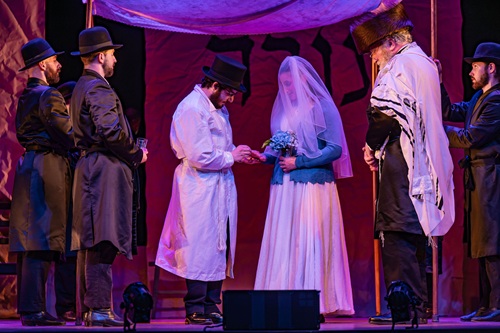
One question that I was asked was if you have to be Jewish to enjoy Fiddler On The Roof In Yiddish. The answer is no. At its heart, it is a family story that everyone can relate to. There are a few things that you need to keep in mind:
- Although the musical is in Yiddish, there are English and Russian subtitles.
- You do not need to understand Yiddish to enjoy it, but if you don’t enjoy reading subtitles, keep that in mind. It pulls some people out of the story if you aren’t used to them.
- If you wear glasses or contacts, make sure that you are wearing them so that you can read the subtitles. They are large but, if you don’t want to strain to see them if you are near-sighted.
- Finally, bring tissues – you may get just a little teary-eyed.
Tickets were provided to me at no charge for review purposes. Opinions are my own.