

There are luxury goods, and then there are objects that make you understand true craftsmanship.
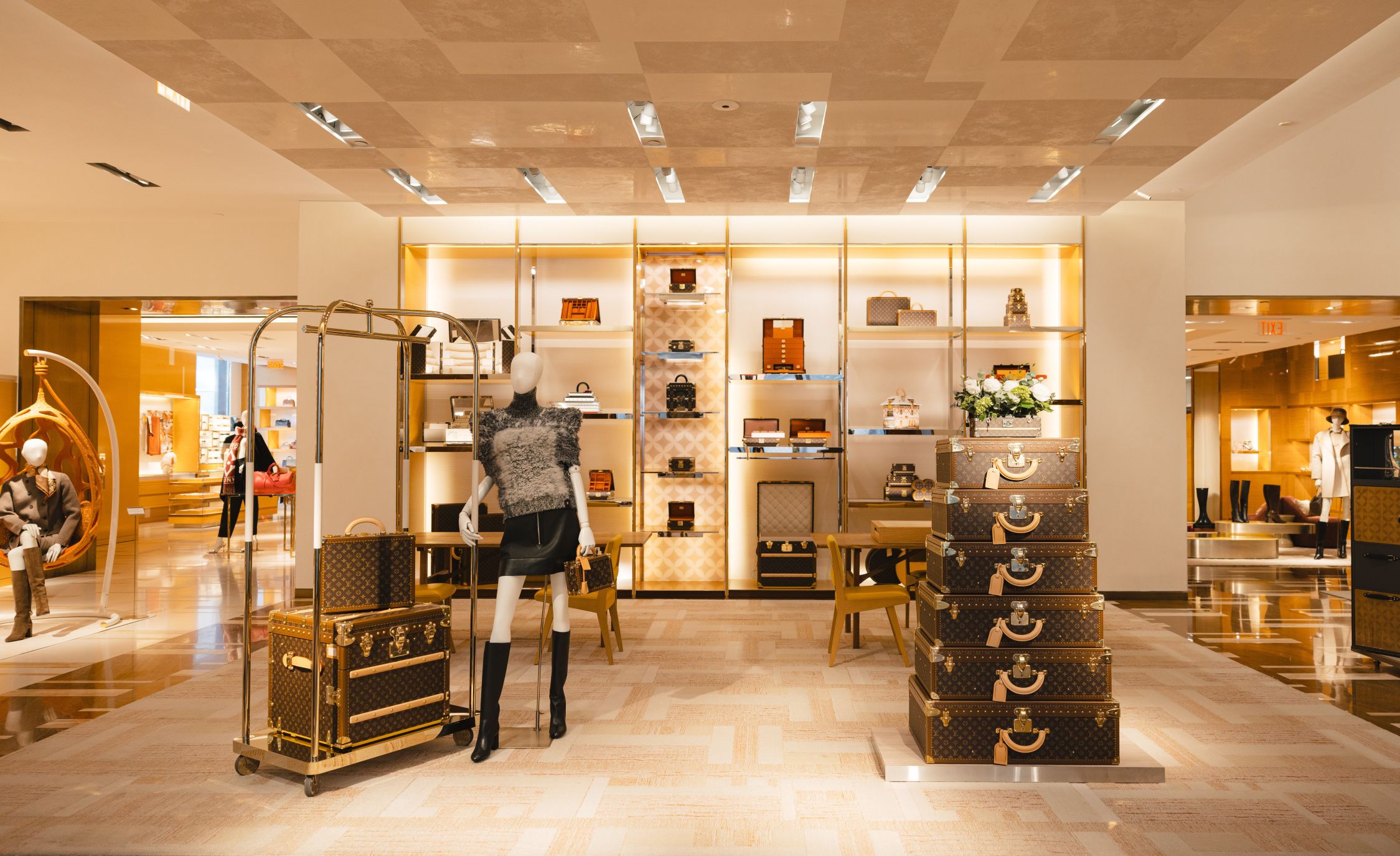
That was my reaction walking through Louis Vuitton’s Savoir-Faire Toronto, an immersive presentation taking over the House’s flagship 150 Bloor Street West location until October 4. It is open from 11am-6pm Sunday-Wednesday and 11am-7pm Thursday-Saturday.
Savoir-Faire brings together some of Louis Vuitton’s most exceptional creations under one roof, from women’s and men’s ready-to-wear and fine and high jewellery to watches, leather goods, jewellery boxes, Objets Nomades furniture and, of course, the trunks that have been part of the House’s story since Louis Vuitton was founded in 1854.
But this isn’t simply an opportunity to see beautiful and, in some cases, extraordinarily rare pieces. Savoir-Faire is really about craftsmanship, history and the stories behind the objects.
From Travel Trunks to Collectible Design
Travel is where the Louis Vuitton story began, and more than 170 years later, it remains woven throughout the collection.
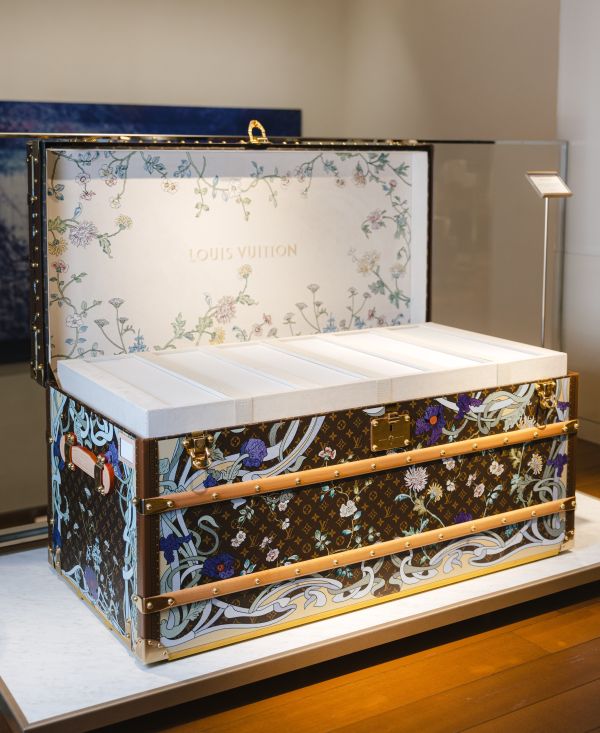
That history is particularly evident in the House’s hardsided pieces. Several trunks are making their Canadian debut at Savoir-Faire Toronto, including the Malle Vin, created to turn wine tasting into a travelling experience, and the Courrier Lozine 110 Monogram Asnières Bloom.
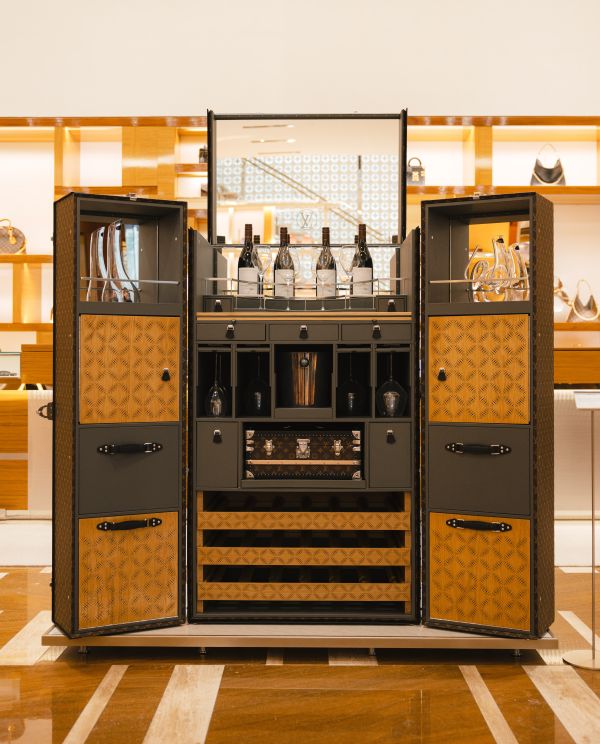
The latter takes its inspiration from the stained-glass window at the historic Louis Vuitton family home in Asnières-sur-Seine, France and is one of those details that becomes even more interesting once you know the story behind it.
Furniture Designed With Travel in Mind
Some of the most fascinating pieces in Savoir-Faire come from Objets Nomades, Louis Vuitton’s collection of furniture and design objects created in collaboration with internationally renowned designers.
Several of the pieces are rarely seen in Canada, making their appearance in Toronto particularly notable. During my tour, I was struck by how often the designs came back to the idea of movement.
Cabinets open, close and transform. Furniture can be reconfigured. Pieces that look sculptural still have a practical purpose. Even contemporary designs carry a trace of the House’s travel heritage: the idea that treasured possessions could be packed up and brought along on a journey.
Other pieces play with light, transparency and modularity. Some can be folded or moved; others can be customized in different colours. As my guide put it while showing me the collection, these aren’t simply pieces of furniture; they can be viewed as pieces of art.
Pieces You Won’t Normally See in Canada
Part of what makes this particular Savoir-Faire presentation worth seeing is exclusivity.
Several of the Objets Nomades and high jewellery creations have been brought to Canada specifically for the Toronto event and aren’t pieces you would typically find at the Bloor Street store.
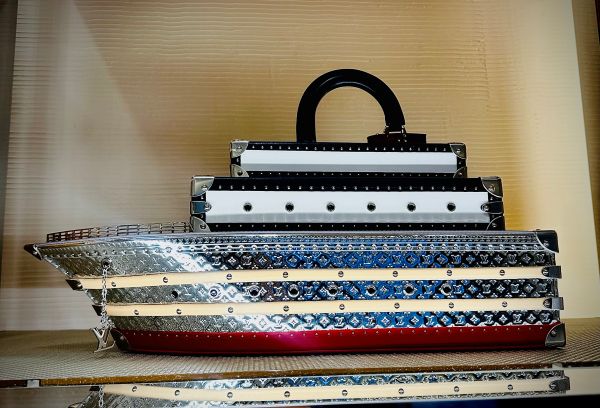
You will also see spectacular jewellery boxes like the Louis Boat, designed to resemble the House’s striking Shanghai flagship, which is shaped like a ship.
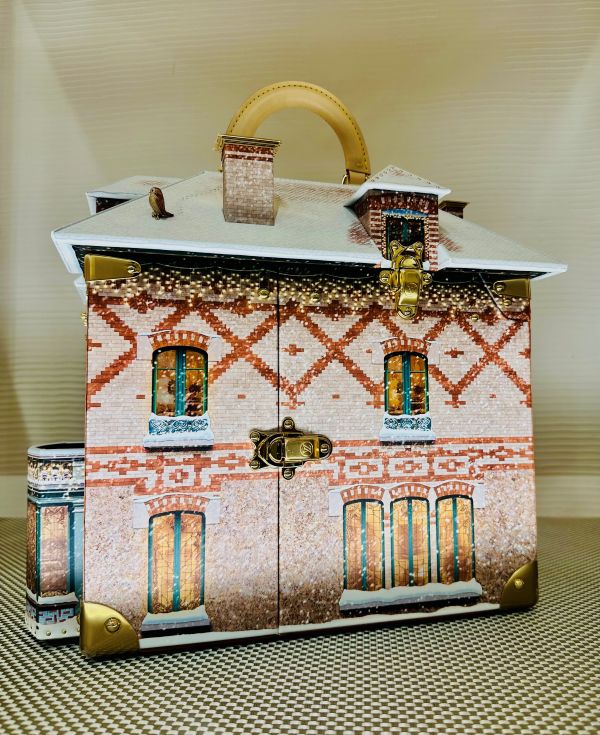
There is even one that is made to look like Louis Vuitton’s home, Maison d’Asnières, located in the Paris suburb of Asnières-sur-Seine.
A Few of My Favourite Pieces
With this much to see, choosing favourites isn’t easy. I could easily have shared almost everything in the store, but a few pieces stood out.
Nano Set Mother of Pearl
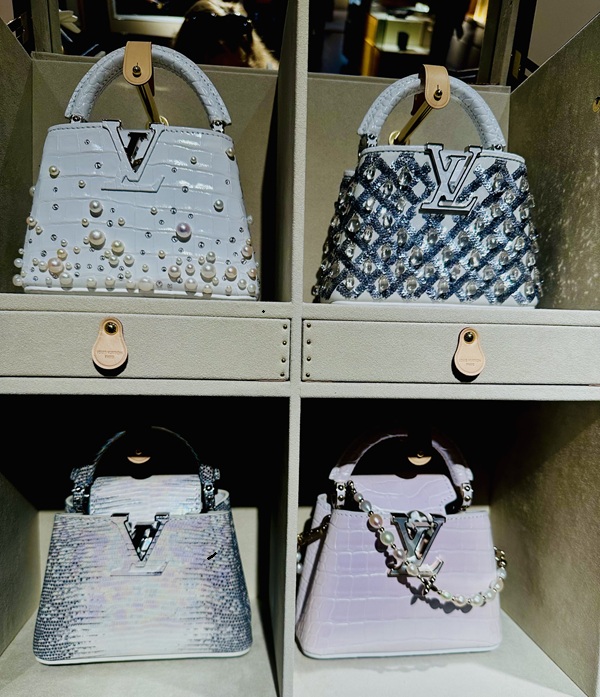
This was an immediate favourite. Four miniature Capucines bags are presented together inside their own Monogram trunk, making the set feel more like a collector’s piece than a traditional handbag purchase. The bags are beautifully detailed, but I also love the presentation: the trunk is as much a part of the piece as what’s inside it.
The Capucines itself has a connection to Louis Vuitton history. Its name comes from Rue Neuve-des-Capucines in Paris, where Louis Vuitton opened his first store in 1854. And yes, I asked how much the complete trunk and bag set costs: approximately $103,000. But that includes the bags.
Cocoon Couture Curupira
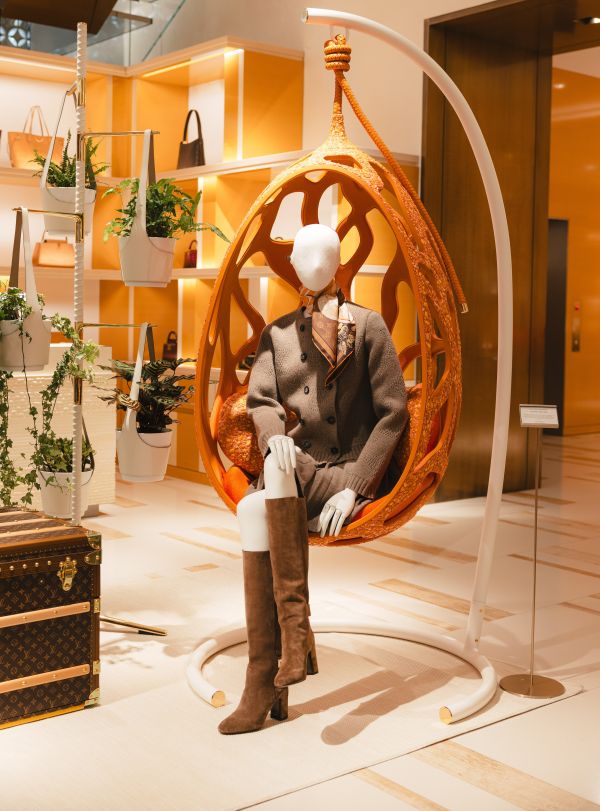
One of the standouts is the Cocoon Couture Curupira by Brazilian design studio Estúdio Campana. Created as a one-of-a-kind version of the studio’s now-iconic Cocoon chair, the piece features elaborate embroidery, enameled stones and sequins inspired by Curupira, the legendary protector of Brazil’s forests. It can be yours for a cool $174,000.
The Objets Nomades Collection
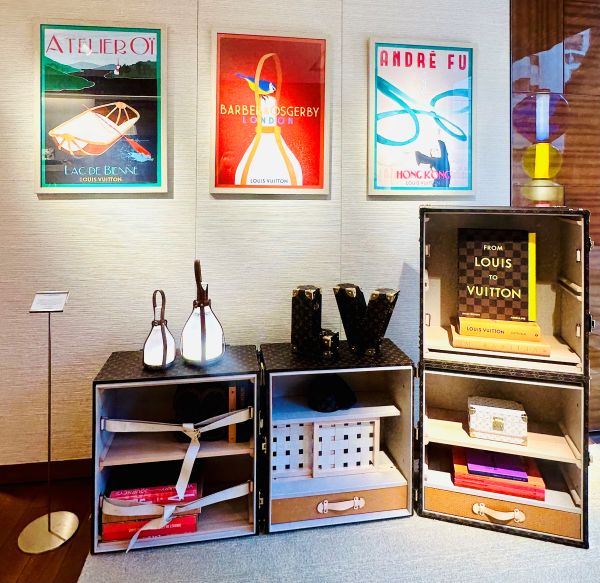
I have a soft spot for great interior design, so perhaps it isn’t surprising that I kept gravitating back to the Objets Nomades pieces.
What I particularly loved was that so much of the collection is genuinely functional. Pieces move, fold, open, close or can be reconfigured depending on how you want to use them. That practicality also connects beautifully to Louis Vuitton’s travel heritage: these may be contemporary design objects, but the idea of creating beautiful things that can move with you is very much part of the House’s DNA. My personal favourite as an avid reader was the Malle Bibliothèque, which can be configured four different ways.
The Lighting
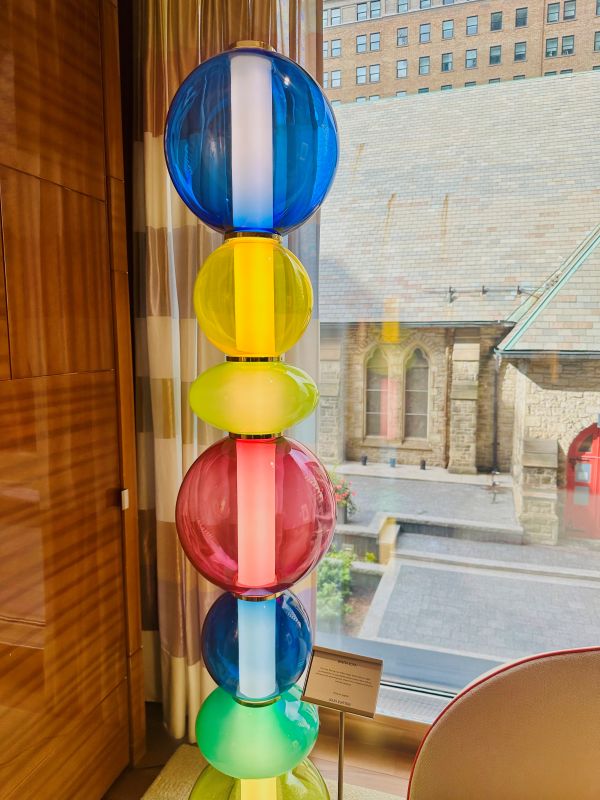
Some of the lighting pieces were among the quieter discoveries of the exhibition, but they were also among my favourites. Portable designs can be moved indoors or outside when entertaining, while other pieces use transparency and light almost as another design material.
One particularly striking piece replaces traditional canvas with glass, allowing light to pass through it and change the atmosphere depending on where it is placed. The Totem Lumineux with hand-blown Murano glass is a functional work of art.
That combination of beauty and practicality kept coming up throughout Savoir-Faire. Yes, these are extraordinary luxury objects, but many of them are also meant to be lived with, used and, perhaps most importantly, talked about.
The Story Is Part of the Luxury
Perhaps the most interesting thing I learned during my visit had nothing to do with diamonds, handbags or furniture.
Before working with clients, Louis Vuitton team members undergo approximately four weeks of training in the history of the House. Storytelling is considered essential because the object itself is only part of what someone is buying.
As my guide explained, clients often choose pieces to commemorate something personal: a wedding, a new home or another important milestone. The goal is to connect that moment with the history and craftsmanship of the House.
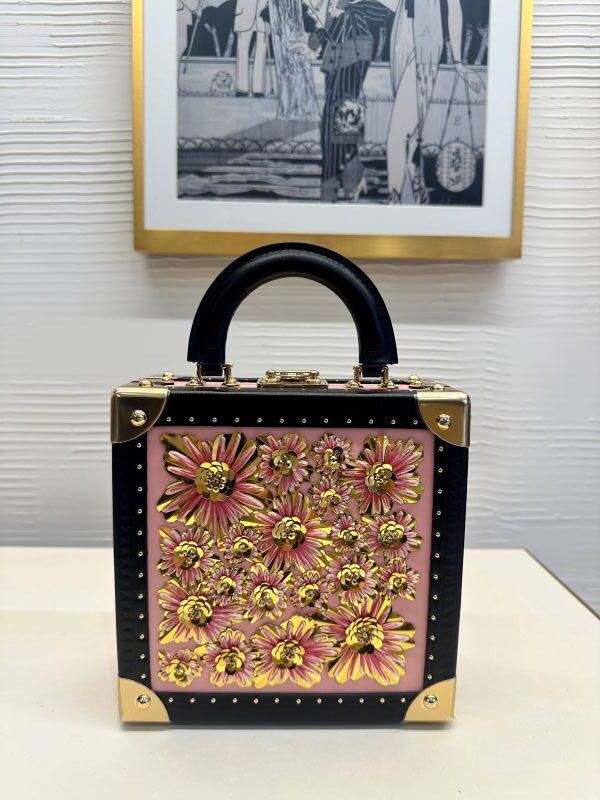
That also helps explain the level of customization available. Hardsided pieces can be created specifically for an individual client and their needs. One example shared during my tour involved a golfer who wanted a custom piece designed to store his equipment. Bespoke creations can take approximately one to two years because the work is done in Paris.
The artisans themselves are part of a continuing tradition: before retiring, experienced craftspeople can spend at least a year training the next generation.
That, ultimately, is what Savoir-Faire does particularly well.
You can certainly walk through and admire the extraordinary handbags, jewellery, trunks and furniture. But look a little closer and almost everything has another story behind it: a designer, an artisan, a historic reference, a technical challenge or an idea that reaches back to Louis Vuitton’s beginnings as a trunk maker.
If you are a fan of history, design, and of course, luxury craftsmanship, Louis Vuitton’s Savoir-Faire Toronto is not to be missed.