

Food is sustenance at its most rudimentary and an intertwining of history, migration, coexistence, climate, religion, and family at its richest and deepest. There are so many more histories to be told.
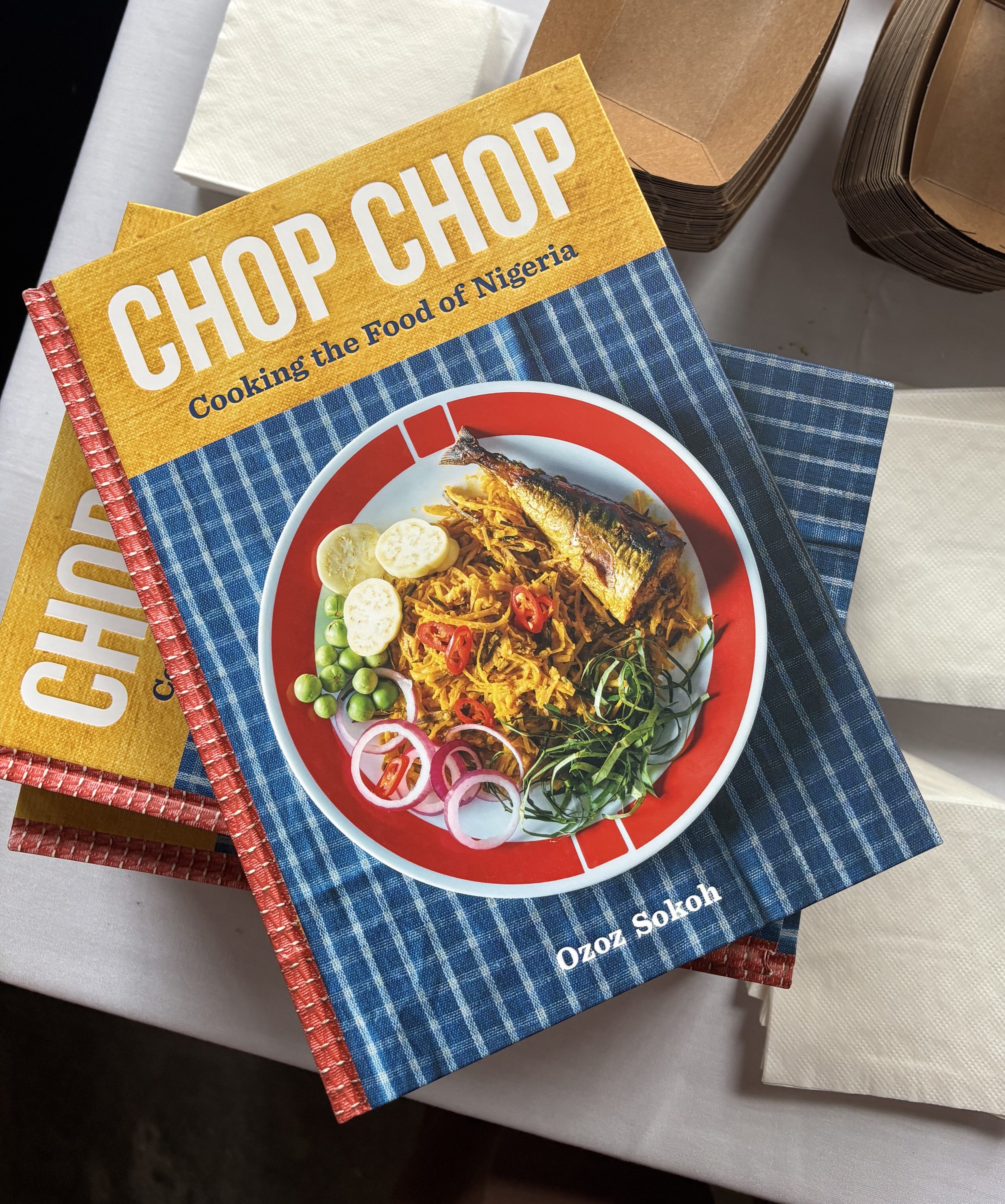
“I’d always wanted to see photographs of Nigerian food and food culture in print,” said Nigerian-Canadian geologist and home cook Ozoz Sokoh whose cookbook Chop Chop invites fellow home cooks on a journey of homeland flavours, ingredients, and dishes written to become treasured meals for you and me.
I had the opportunity to chat with Ozoz’s decision to write Chop Chop and the many rich influences that contributed to her bold debut.
*This conversation has been edited for clarity and length*
Q: How long have you been engaged in recipe development?
A: Since 1998 when I was at university in Liverpool. One of the first recipes I developed is a riff on a jarred tomato salsa. I made a version based on the ingredients list at the back of the jar and it was miles above the original. I’ve been making it ever since!
Q: How would you describe your creative approach?
A: My approach is largely defined as “from geology to gastronomy.” It is underpinned by my 20-year career as a geologist who slowly eased into food via writing a blog, Kitchen Butterfly, and cooking. It informs the way I write, my approach to recipe testing, and documentation, and lately, I’m documenting all the synergies and ties between both areas of study, and loving it!
Q: What motivated you to publish a cookbook and at that specific point in your career?
A: I’d always wanted to see photographs of Nigerian food, and aspects of food culture in print. In 2020, I’d just moved to Canada so I had time on my hands to finally think through a big project. I also didn’t have a job and that allowed me to write a book proposal and figure out the various pieces of the puzzle.
Q: Who are your greatest culinary and literary inspiration?
A: My dad Chris, who passed away in 2001, knew how to coax flavor from ingredients with minimal seasoning. And he knew how to grill – his grilled chicken is still, without a doubt, the best I’ve ever tasted. My mom, Florence, taught me to write about everything. She has written and self-published books including a 2018 memoir for her seventieth birthday, Of Grand Visions and God’s Grace. The confidence and ability to put pen to paper is one that was nurtured from a young age and I’m thrilled to see that I’ve brought the gene to life in Chop Chop.
Q: What’s one ingredient you cannot live without?
A: Garri
Q: What is your philosophy for writing culturally-rooted recipes that honour tradition and nostalgia but are inviting to those who are new to the cuisine and may not have access to a wide array of international products?
A: Naming is important – people, places, things that are core aspects of the culture and cuisine. That’s key for context and honouring the roots. As an invitation to those encountering things for the first time, I try to focus on sensory aspects: what does an ingredient taste like, what notes are similar to other ingredients? And, where possible, I share substitutes.
Q: How do you navigate writing recipes that are accessible to home cooks?
A: As a home cook, this is my natural state of being, and so I write from that standpoint. As someone who has often written about food while working full-time, I adopt a lot of modular approaches and share those.
Q: What strategies do you recommend for managing creative blocks?
A: Use frameworks that can help you think of ideas, and through slow periods like the 5Ws and 1H. Who, what, when, where, how, why can help you think about angles and perspectives to approach a thing from. Let’s take an orange – maybe the “who” could be someone who created an interesting variety, or someone who does fascinating things with oranges. I love this approach because it offers clear perspectives that can be both researched and understood.
Q: What is one piece of advice you’d like to offer to aspiring recipe developers?
A: Figure out what you like about a recipe and why you think others should know it, and perhaps fall in love with it, then write the recipe before you even go into the kitchen to cook it. Think about the sensory aspects – the textures and colours you want to showcase and off you go.
Q: Are you working on a new project you’d like to tease?
A: I’m working on a Jollof Rice project using a recipe biography approach over a 100-year period. I’m exploring recipes in cookbooks, making notes on similarities and differences, and using what I learn to chart a course. I’m also working on a Historic Nigerian Menu project, looking at menus, and close-reading them.
Q: Was there a story or recipe you hesitated on but ultimately opted to include in your cookbook?
A: There’s a recipe for a sweet Frejon, a pureed bean and coconut dish, often served in a savory way at Easter, with roots in Brazil. The sweet version is dessert-perfect, and also makes me think of other bean desserts around the world like those in southeast Asia where adzuki beans feature. While writing and researching, I came across sweet versions which I knew had to be in Chop Chop – it felt like reclaiming and sharing the breadth of possibilities with this dish that’s common in one way.
To explore Nigerian flavours and get your hands on a copy of Ozoz’s debut cookbook, head over to her website. Ozoz is a busy woman, so there are no shortages of ways to stay in touch with her. You can follow along via OzozSokoh.com, Feast Afrique, and Kitchen Butterfly and even subscribe to her newsletter Weekend Wednesdays promising “musings and explorations on food, life, and writing.” For a visual exploration of Ozoz’s work, don’t forget to give @kitchenbutterfly a follow.