


There’s something incredibly satisfying about baking from scratch, especially when the results are as delicious as the process is rewarding. Whether you’re an experienced home baker or someone who finds working with sourdough a little intimidating, having a great recipe, the right tools and a few expert tips can make all the difference.
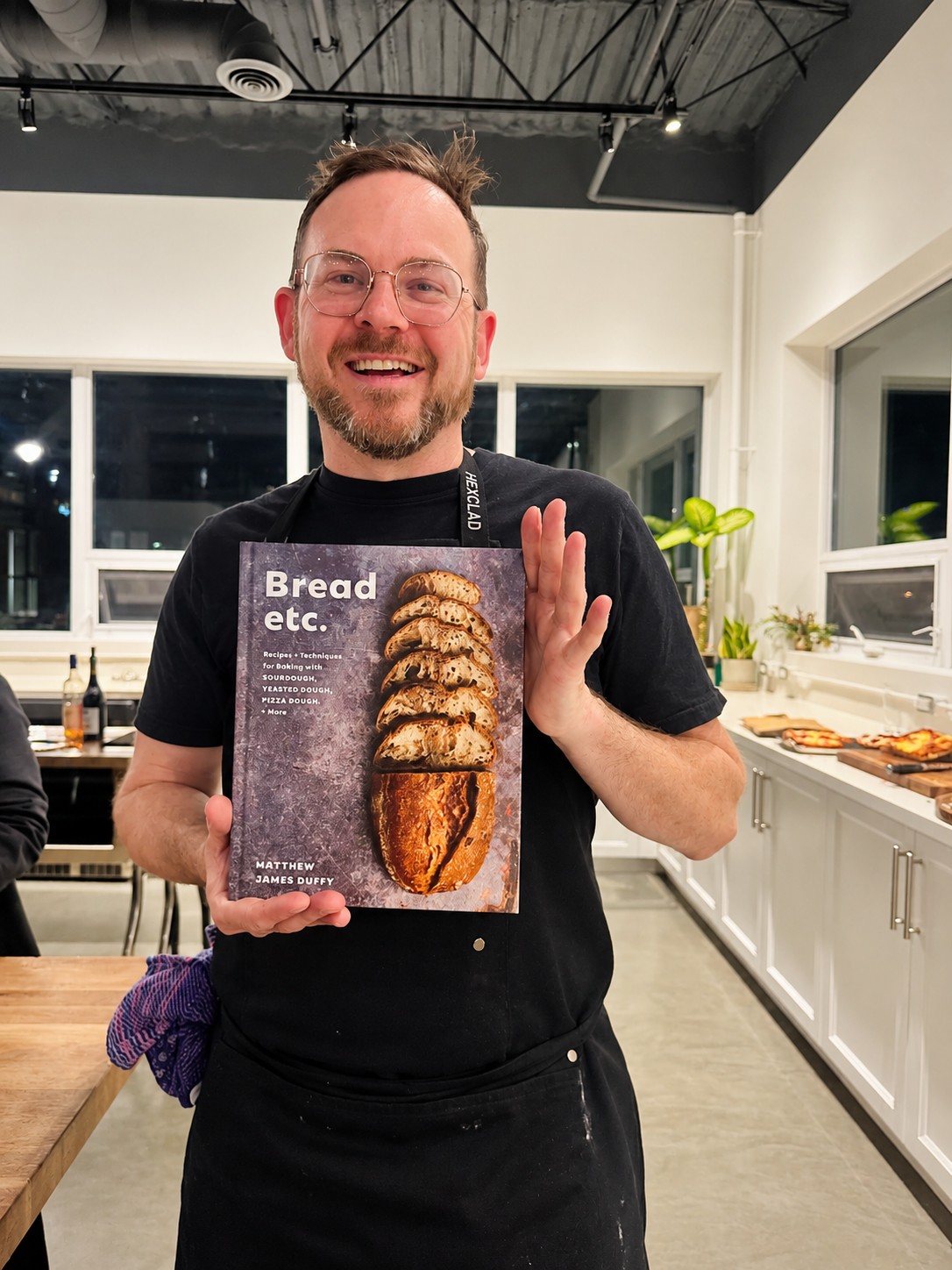
We recently joined HexClad and sourdough expert Matthew James Duffy at RILY Kitchen in Toronto for a hands-on baking experience celebrating the launch of the brand’s new Hybrid Bakeware Collection. During the evening, we made three delicious recipes: Sourdough Focaccia, Roman-Style Pizza Dough and Fudgy Sourdough Brownies. And yes, they were all amazing!
A New Addition to the Kitchen
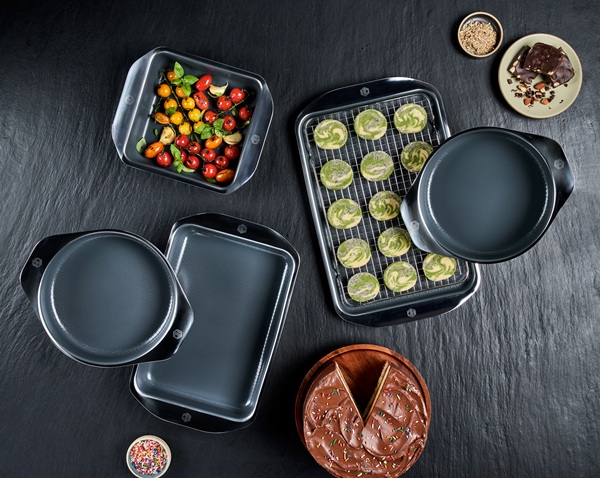
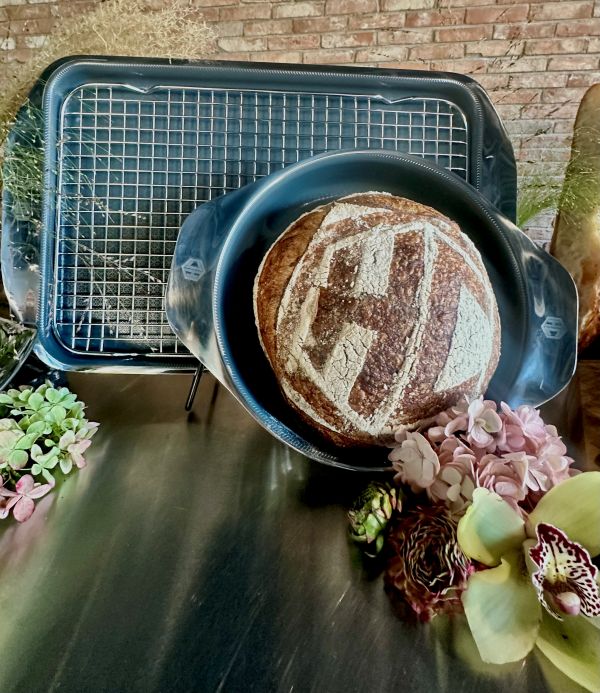
Best known for its cookware, HexClad has expanded into bakeware with a six-piece collection that includes rectangular and square baking pans, two round cake pans, a jelly roll pan and a cooling rack.
The collection combines stainless steel with a ceramic nonstick surface and an aluminum core designed to distribute heat evenly. It’s an interesting extension for a brand traditionally associated with stovetop cooking, particularly for home bakers who enjoy experimenting with everything from bread and pizza to cakes and brownies.
Our evening with Duffy gave us an opportunity to put the collection to use while learning a few techniques from someone who knows his way around sourdough.
Baking with Matthew James Duffy
If you’ve ever been intimidated by the idea of making sourdough, Duffy has some reassuring advice.
During our conversation, he explained that his Roman-style pizza dough undergoes a lengthy fermentation process of approximately 48 hours. While that might sound like a major commitment, the actual hands-on work is surprisingly manageable.
Mixing the dough takes approximately 30 minutes, followed by three hours of resting at room temperature and then time in the refrigerator. According to Duffy, the total hands-on work is only about an hour.
The dough’s high hydration and long fermentation help create its distinctive texture. Duffy explained that this type of dough can be challenging to bake in a conventional pan, making it an interesting test for the new bakeware.
For the Roman-style pizza, he recommends partially baking the dough with tomato sauce before adding the cheese and finishing it in the oven. This helps achieve the blistered surface and crisp crust associated with this style of pizza.
And what about making baked goods look as beautiful as those prepared by a professional?
Duffy’s advice is refreshingly straightforward: practice.
Even as an experienced baker, he continues to refine his techniques and presentation. He also emphasized that baking doesn’t have to be perfect. A loaf of bread that doesn’t look exactly as planned can still taste wonderful. If the appearance isn’t quite right, there’s always the option of slicing it for sandwiches or serving it in a breadbasket.
It’s an encouraging reminder that baking is as much about enjoying the process as it is about the finished product.
Bringing the Joy Back to Baking
One of the biggest takeaways from our evening with Matthew James Duffy was that baking doesn’t have to be intimidating. It takes patience, practice and a willingness to experiment, but the results are worth it.
Now, for what you have been waiting for – the three delicious sourdough recipes from Matthew James Duffy – two of them from his cookbook, Bread etc.
Sourdough Focaccia
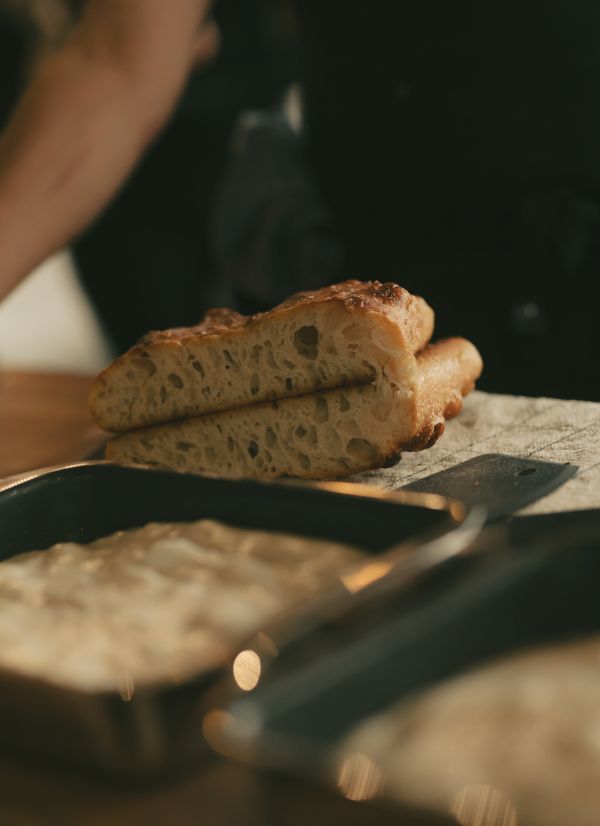
Makes one 1,200 g focaccia | Pan: 14 × 10-inch Detroit-style pizza pan or half-sheet pan | Desired dough temperature: 82°F (28°C)
Ingredients
| LEVAIN | |
| Bread flour | 60 g |
| Warm water | 60 g |
| Sourdough starter | 60 g |
| FINAL DOUGH | |
| Water 1 | 417 g |
| Prepared levain | 181 g |
| Bread flour | 412 g |
| All-purpose flour | 82 g |
| Semolina | 55 g |
| Water 2 | 27 g |
| Salt | 12 g |
| Olive oil, plus extra for bowl and pan | 14 g |
| TOPPING | |
| Olive oil | 3 tablespoons |
| Flaky sea salt | To taste |
Method
- Levain — Combine flour, warm water and starter in a jar or container. Cover loosely and ferment at room temperature for 4–5 hours, until ripe.
- Autolyse — Combine water 1 and the levain in a large bowl, breaking up the levain with your hands. Add the flours and mix until no dry patches remain.
- Mix and rest — Add water 2 and salt. Mix by hand for about 5 minutes until the salt dissolves. Cover and rest for 20–30 minutes.
- Knead — Knead in the olive oil for about 5 minutes until incorporated. Transfer to a lightly oiled bowl.
- Bulk fermentation — Cover and ferment at room temperature for 2 hours, folding the dough three or four times about 15 minutes apart. Refrigerate for 12–15 hours.
- Pre-shape and rest — Remove from the refrigerator 20 minutes before shaping. Lightly oil a 14 × 10-inch pan or half-sheet pan. Round the dough into a taut ball and transfer to the pan with oiled hands.
- Final fermentation — Cover and proof at room temperature for 3–4 hours, until roughly 1½ times its original size, light and relaxed.
- Preheat — Heat the oven to 425°F (220°C).
- Shape and top — Gently stretch the dough toward the pan corners, avoiding tears or deflation. Pour 3 tablespoons olive oil over the surface and rub it across. Dimple deeply with fingertips, taking care not to puncture the bottom. Sprinkle with flaky salt.
- Bake — Bake for 20 minutes. Rotate the pan 180° and bake another 10–15 minutes, until golden brown and pulling away from the pan sides.
- Cool — Slide the focaccia onto a wire rack to cool.
Variations
Rosemary + sea salt — Add 3 tablespoons chopped fresh rosemary and generous pinches of flaky sea salt before baking.
Potatoes + olives — Scatter a small handful each of halved pitted olives and roasted potato chunks over the dough before baking.
Tomatoes + herbs — Add about ½ cup cherry tomatoes and 2 tablespoons chopped fresh herbs (or 1½ tablespoons dried herbs), plus flaky salt.
Roasted vegetables + cheese — Top with leftover roasted or grilled vegetables such as peppers, eggplant, zucchini, mushrooms or onions; finish with crumbled feta or grated Gouda.
Roman-Style Pizza Dough
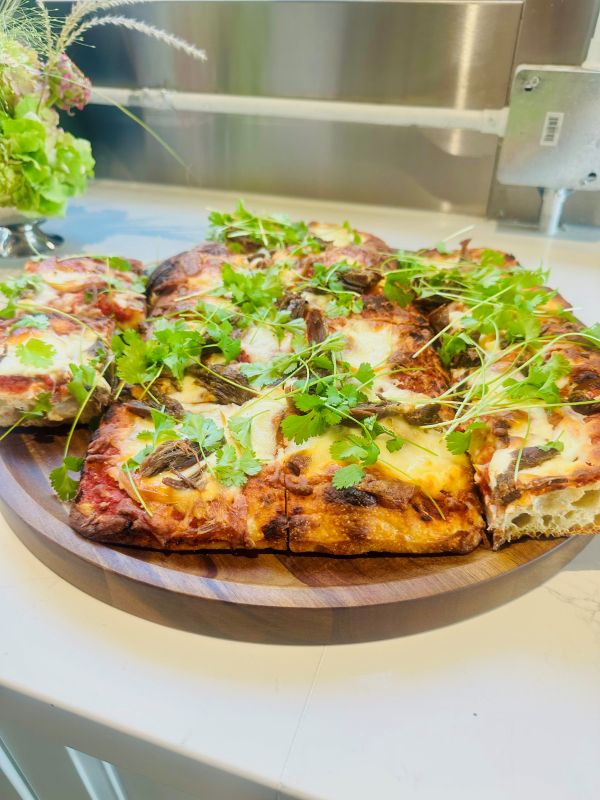
Makes one 24 × 8-inch pizza or one 18 × 13-inch pizza | Baking steel or pizza stone and Roman-style pan or half-sheet pan | Desired dough temperature: 86°F (30°C)
| LEVAIN | |
| Bread flour | 51 g |
| Warm water | 51 g |
| Sourdough starter | 51 g |
| FINAL DOUGH | |
| Water 1 | 395 g |
| Levain | 152 g |
| Bread flour | 380 g |
| All-purpose or 00 flour | 127 g |
| Water 2 | 20 g |
| Salt | 13 g |
| Olive oil | 13 g |
| TOPPING | |
| Tomato sauce | As needed |
| Cheese, vegetables, meat, herbs, etc. | As desired |
Method
- Levain — Mix flour, water and starter in a small bowl. Cover loosely and ferment at room temperature for 4–5 hours, until ripe.
- Autolyse and rest — Combine water 1 and levain in a large bowl. Add both flours and mix by hand until no dry patches remain. Cover and rest for 45 minutes.
- Mix and rest — Add water 2 and salt. Mix thoroughly by hand for about 5 minutes until the salt dissolves. Target dough temperature: 86°F (30°C). Cover and rest for 20 minutes.
- Knead — Knead in olive oil for approximately 5 minutes, until absorbed and no longer greasy.
- Ferment — Cover and rise at room temperature for 2½–3 hours, with two or three folds during the first 2 hours, at least 30 minutes apart (suggested at 30, 60 and 90 minutes). Refrigerate for 24–48 hours.
- Rest — Remove dough from the refrigerator 1 hour before cooking.
- Prepare oven — After the hour, place a baking steel or pizza stone on the middle oven rack and preheat the oven to its highest setting. Lightly oil the pizza pan or half-sheet pan.
- Stretch and rest — Using wet or oiled hands, gently stretch dough into a rectangle and place in the oiled pan. Rest for 20–30 minutes. Stretch from the center toward the corners and coax dough to fill the pan. If elastic, rest an additional 10–20 minutes before continuing.
- Sauce — Spread tomato sauce all the way to the edges; this style does not require a border.
- Bake — Bake 12 minutes, remove and add toppings requiring cooking (such as cheese, vegetables or meat). Bake about 12 minutes more until the edges are golden. Finish with toppings not requiring baking, such as fresh herbs, Parmesan or pickles.
- Cool — Loosen the edges with a spatula and slide onto a wire rack to avoid a soggy bottom. After a few minutes, transfer to a board or pan and cut.
- Store and reheat — Refrigerate leftover slices, covered, for up to 3 days. Reheat in a lightly oiled covered skillet over medium-low heat for 3–4 minutes, then uncover for 2–3 minutes to crisp the base.
Fudgy Sourdough Brownies
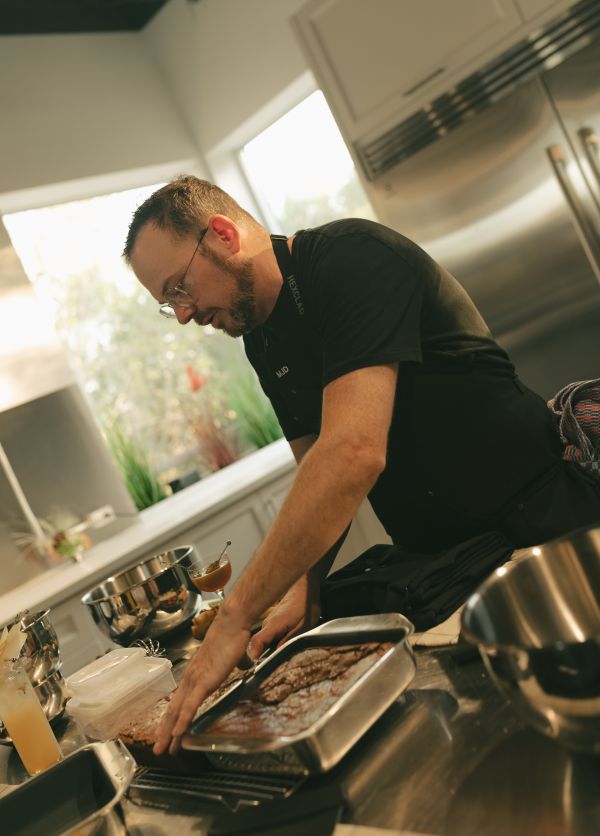
Makes nine brownies | Pan: 9″x 9″ square cake pan
Ingredients
| LEVAIN | |
| All-purpose flour | 100 g |
| Rye flour (sub all-purpose flour | 30 g |
| Sourdough starter | 125 g |
| Butter | 151 g |
| Dark or semi-sweet chocolate | 400 g |
| Eggs (4 whole) | 226 g |
| Dutch cocoa powder | 50 g |
| All-purpose or 00 flour | 127 g |
| White sugar | 153 g |
| Packed brown sugar | 153 g |
| Vanilla paste or extract | 5 g |
| Salt | 3g |
Method
- Preheat the oven to 350°F. Line a 9″x 9″ baking dish or pan with parchment paper.
- Melt chocolate and butter in a double boiler. To do this, add about 3 inches of water into a small pot and boil on high. Add chocolate to a heat proof bowl and set on top of the pot of boiling water, making sure it does not touch the water. Turn heat down to medium high. Mix constantly until chocolate is fully melted. Remove bowl from heat and set aside.
- Sift the flours and cocoa powder into a small mixing bowl. Add the rye bran back in (it would have sifted out). Set aside.
- In a medium mixing bowl, combine the eggs, sugars, salt, and vanilla. Using a mixer fitted with the whisk attachment, beat on high speed until the mixture thickens and becomes pale in color and falls from the beater in a wide ribbon that folds back on itself and slowly dissolves on the surface, this should take around 5 minutes.
- Using a rubber spatula, fold in the sourdough discard to the chocolate. Once incorporated, fold the chocolate mixture into the egg mixture. Add the flour and fold it in quickly but gently with the rubber spatula so that you don’t deflate the air that’s been incorporated into the eggs.
- Pour the batter into the prepared dish and smooth the top with a spatula. At this point, feel free to top with nuts or chocolate chips. Bake until the top looks slightly cracked and feels soft to the touch, about 25 minutes. Let cool completely on a wire rack.
Recipes used with permission from: Bread Etc. Recipes + Techniques for Baking with Sourdough, Yeasted Dough, Pizza Dough + More by Matthew James Duffy, supplied pages 201–203 and 355–357. Copyright 2025. Published in Canada by Appetite by Random House, a division of Penguin, Random House Canada Limited.