

Content warning: This article includes discussion of domestic violence and violence against women, which some readers may find distressing.
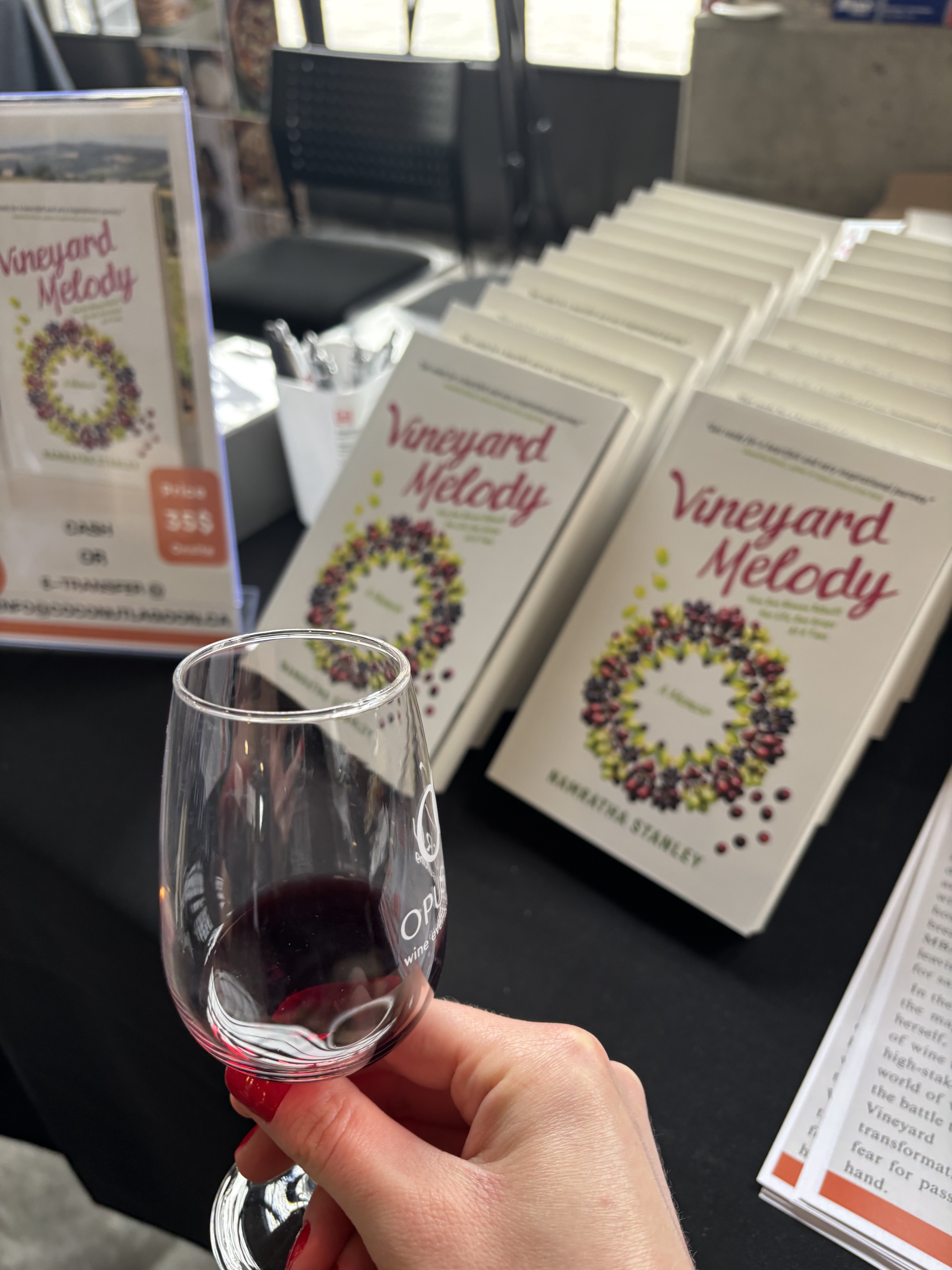
“I hope readers not only enjoy the story, but also find inspiration, courage, and healing within its pages,” said Namratha Stanley, author of the memoir Vineyard Melody. “If my journey encourages even one person to believe in themselves, embrace change, or start over with hope, then sharing my story will have been truly worthwhile.”
Escaping an abusive marriage, Namratha fled India to start anew in Bordeaux, France. Wine and winemaking became a source of courage as much as curiosity for Namratha, and she slowly began rediscovering and reimagining herself.
I had the pleasure of learning more about Namratha’s remarkable life and her decision to write Vineyard Melody – a story of displacement and rootedness, healing and self-discovery.
*This conversation has been edited for brevity and clarity*
Q: In three words, how would you describe your style and philosophy as a writer?
A: Raw, resilient, and hopeful. I write from a place of truth, even when it is uncomfortable. My writing carries resilience because every chapter of my life required me to rise again, and above all, I want readers to walk away with hope. The belief that life can still become beautiful even after the darkest storms.
Q: Why share your story with the world at this time?
A: For many years, I was simply surviving. Then I was rebuilding. And when I started to write, I felt ready to transform those experiences into something meaningful for others. So many women across the world continue to live in silence, afraid, ashamed, uncertain of what the future holds if they leave difficult situations. I know that feeling intimately.
I didn’t want the story to remain only about suffering. I wanted people to see that life can begin again in the most unexpected ways. That healing can come through purpose, through passion, through discovering new worlds and new versions of yourself.
In my case, that world happened to be the vineyards of Bordeaux and the culture of wine. And if my story can help even one woman feel less alone, or help her believe that another life is possible, then sharing it becomes worthwhile. The world needs hope and joy!
Q: How long did it take you to write Vineyard Melody?
A: It took me almost two years to write Vineyard Melody. The actual writing process was very emotional and intense, especially in the beginning, because revisiting those memories brought back many difficult feelings I thought I had already healed.
Once the manuscript was complete, the real work of refining it began. I went through multiple drafts, constantly rewriting, restructuring, and improving the story. Along the way, I signed with my literary agent, and then a couple of years later, I signed with my publisher. So overall, it was a long journey from the first page to publication.
Q: Was there a particular story or memory you hesitated to include in Vineyard Melody? What made you change your mind?
A: If I had written every single experience, every anecdote, and every event from those years, the book would probably have been a thousand pages long. So I had to make very difficult choices about what to include and what to leave out. In the end, I think Vineyard Melody contains my most important memories, the moments that truly shaped me and changed the course of my life.
Some details were difficult to revisit emotionally, while others felt too personal or too painful at the time. But I also realized that without honesty, the story would lose its depth and meaning. So I focused on the experiences that carried the strongest emotions and that best reflected the journey of survival, transformation, and rebuilding. Today, I feel at peace with those choices. The book says what it needed to say.
Q: What made winemaking and wine culture such a powerful tool for identity formation, self-discovery, and healing?
A: When I arrived in Bordeaux, I was coming from years of fear, restriction, and survival. And suddenly I found myself in an environment built around patience, beauty, craftsmanship, conversation, and pleasure. That contrast itself was healing.
What fascinated me most was that wine is never just a product. It is connected to the land, to history, to people, to emotion, to memory. Every bottle carries a story. Watching the vineyards through the seasons taught me something very profound, that transformation takes time. Vines go through difficult weather, pruning, loss, and yet the flowers bloom again for the next vintage.
I saw a reflection of my own life in that process. Wine culture also gave me identity through knowledge and skill. The more I learned, the more confident I became. Learning the language of wine, understanding terroir, meeting winemakers, speaking French fluently in professional spaces, all of that slowly rebuilt my sense of self. Knowledge became freedom for me.
And then there was the human side of wine culture. In France, wine brings people together around a table. It creates conversation, connection, and community. So in many ways, wine became much more than a profession. It became a bridge between the woman I had been and the woman I was becoming.
Q: How long have you been writing?
A: I’ve been writing since 2020. I never imagined I would become a writer. Once I began writing Vineyard Melody during the pandemic, something shifted in me. Writing became almost addictive in the best possible way. I feel once you discover that creative flow, you constantly want to return to it. Today, writing feels like a new art form that I’ve discovered later in life, and I genuinely love it. I’m already working on more books, and I think writing will always remain a part of my life now.
Q: Who is your greatest literary inspiration?
A: Colette is my greatest literary inspiration. I deeply admire the way she wrote about women, freedom, emotion, sensuality, and everyday life with such honesty and elegance. What inspires me even more is the woman she was beyond her books: independent, fearless, unconventional, and ahead of her time. She challenged societal expectations and created her own identity. I feel very connected to her spirit as well as her writing.
Q: What strategies do you recommend for managing creative blocks?
A: I usually deal with creative blocks by stepping away and giving my mind time to reset. Sometimes the best thing you can do is take a break, get some sleep, and come back the next day with fresh energy. More often than not, the ideas and writing begin to flow naturally again.
Q: What’s in your glass right now?
A: Chambolle Musigny 1er Cru Les Amoureuses
Q: What is one piece of advice you’d like to offer to aspiring writers, particularly those interested in writing a Vineyard Melody?
A: Write with your heart and be honest with your story. Don’t be afraid of being judged, because authenticity is what truly connects with readers. A memoir is deeply personal, and no one can tell your story the way you can — so own it with confidence.
Q: Is there a new project you’re working on that you’d like to tease?
A: Yes, I’m currently very excited about writing the sequel of Vineyard Melody. The story will explore my daughter settling down with me in France and all the adventures we experience together. I also have a new project focused on creating some interesting wines.
Q: How can people connect with you?
A: You can connect with me by requesting a meeting through my website, www.namrathastanley.com, or by reaching out to me on social media. I’m always happy to connect with readers. On Instagram, you can find me at @namratha_stanley_author, and on LinkedIn at Namratha Stanley. I also connect with readers through Facebook and enjoy engaging with people who resonate with my story and journey.
Q: Is there guidance and resources you’d like to share to assist those who are experiencing domestic violence?
- Step away from the situation and prioritize your safety and well-being.
- Take time to rebuild yourself emotionally, mentally, and physically. Healing is a journey, and it’s important to be patient with yourself.
- Learn something new, whether it’s a skill, hobby, or passion, to help regain confidence and rediscover your sense of purpose.
- If possible, try taking a solo trip or even moving to a new environment. You may be surprised by how much strength, independence, and self-discovery can come from stepping outside of your comfort zone.
- Most importantly, remember that you do not have to go through it alone. Seeking support from trusted friends, family, counselors, or domestic violence support organizations can make a meaningful difference in the healing process.
If you or someone you know is experiencing domestic violence or gender-based violence, support is available. Visit the Government of Canada resource page to find confidential helplines and services near you.