

Room-sharing can be cozy and practical, but it gets chaotic fast when baby gear spreads across every surface. These 10 furniture pieces help you carve out a calm nursery nook inside your bedroom—focusing on compact footprints, smart storage, and items that can keep working for you long after the newborn phase.
1. A mini crib or compact cot
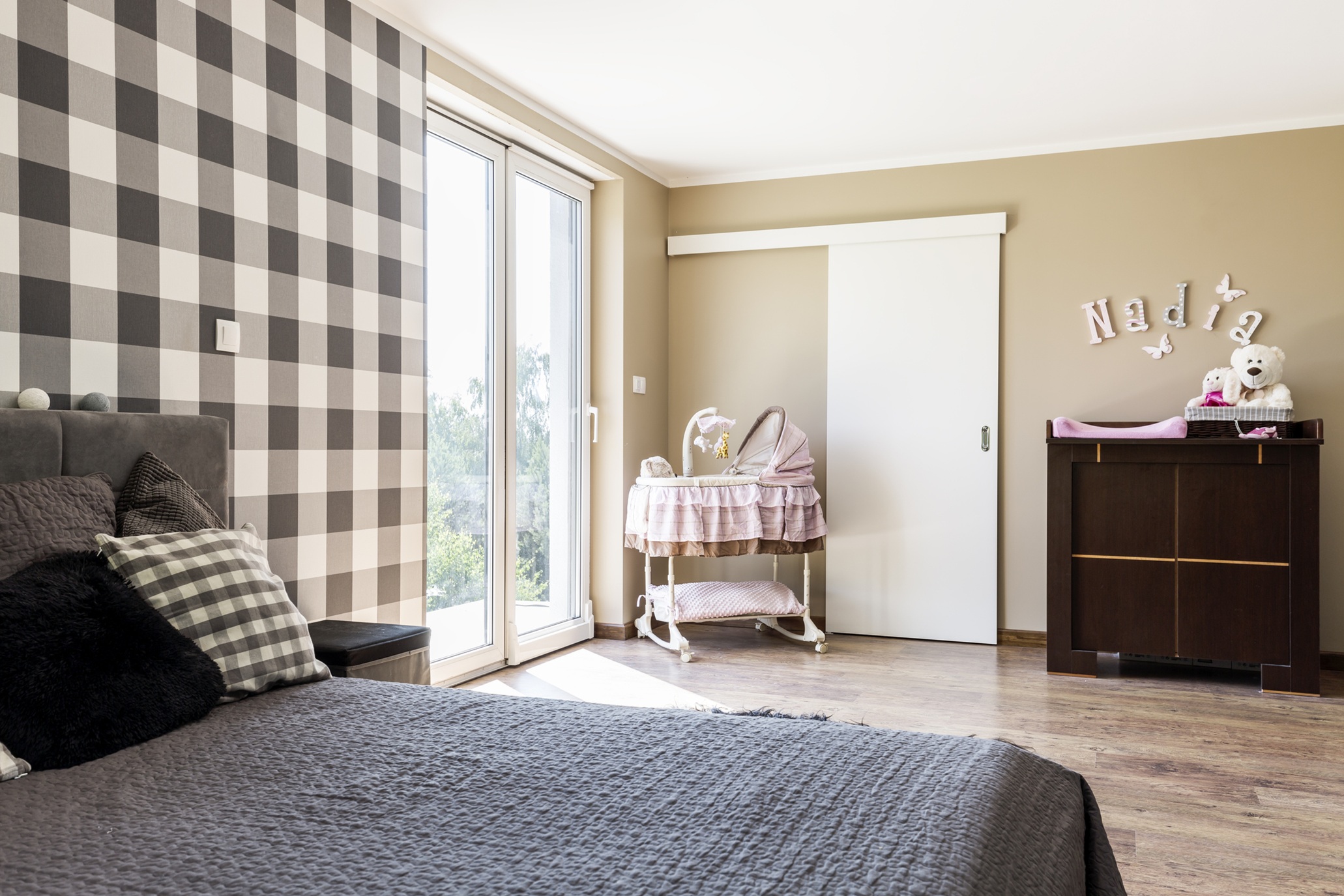
A full-size crib can dominate a shared room, so a mini crib (or other compact sleep option) is often the easiest way to preserve walking space and keep your bedroom layout intact.
Look for models with simple, clean lines so they visually “blend” with adult furniture rather than turning the room into a dedicated nursery set.
If you can, choose a design that can be moved or tucked slightly aside when you need floor space (for example, during daytime tidying).
2. A bedside bassinet (or bedside sleep option)
If the goal is minimal disruption to your bedroom, a bedside sleep setup can reduce the amount of “extra furniture” you need early on. This approach is commonly recommended in nursery checklists because it keeps baby sleep essentials contained to a small zone. Place it where you can still access drawers, closet doors, and your own nightstand without weaving around furniture.
3. A dresser that doubles as a changing surface
In small spaces, multi-functional furniture matters, and many nursery guides suggest using a dresser to handle both clothing storage and diaper changes. The key is treating it like a real changing station: add a secured changing pad and keep supplies within arm’s reach so you’re not stepping away mid-change. If you’d rather have a dedicated piece from the start, browse a purpose-built changing table.
4. A slim, closed hamper (or laundry sorter)
Laundry piles are one of the fastest ways a shared bedroom starts to feel messy, so a closed hamper with a small footprint helps contain visual clutter. A lidded option also keeps the “nursery zone” from spilling into your bedroom aesthetic, which is a common challenge when fitting a nursery into the master. If space is tight, a tall, narrow hamper is often easier to place than a wide basket.
5. A rolling cart (your mobile “night shift” station)
A rolling cart is a small-space favourite because it can hold diapers, wipes, creams, burp cloths, and spare sleepers—and then roll out of sight when you want your room back. This is especially useful if your dresser top is already full (lamps, books, chargers) and you’re trying not to sacrifice your own everyday bedroom setup. Keep the top tier for the things you use every change, and lower tiers for refills so you’re not restocking constantly.
6. Wall shelves or a narrow book ledge
When floor space is limited, wall storage is one of the most effective ways to add capacity without “wrecking” your bedroom flow. Use shelves for diapers, cloths, and small bins—items that are light but bulky—so your dresser drawers stay available for clothing. A narrow picture ledge can also work for bedtime books without needing a full bookcase.
7. Under-bed storage bins (or a low storage trunk)
If you’re already sharing a bedroom, you’re probably also sharing storage, so under-bed bins are a practical way to add room for baby linens and backup supplies. This aligns with the broader small-space advice to repurpose “dead zones” (like under the bed) rather than adding new bulky furniture. Choose bins you can slide with one hand, because you’ll often be doing this while holding a baby.
8. A comfortable feeding chair that suits your bedroom
Many nursery-in-bedroom guides recommend adding a rocker or glider, but the trick is choosing one that still looks like it belongs in an adult space. Prioritize comfort and a slimmer silhouette so it doesn’t visually take over the room. If space is extremely tight, consider a compact accent chair you’d still keep after the nursery phase.
9. A small side table (or C-table) beside the feeding spot
A tiny table beside the chair prevents the “everything on the bed” problem—bottles, water, snacks, phone, soothers—especially during late-night feeds. This is one of those pieces that protects your bedroom from becoming a dumping ground, because it gives essentials a dedicated home. If you already have a nightstand, a C-table can add a second landing zone without needing a full second nightstand.
10. A low-profile storage bench (or lidded toy basket)
Even in the early months, baby “stuff” accumulates quickly, and closed storage helps keep the room restful. A lidded basket or small bench can hold blankets, swaddles, and toys while doubling as a spot to sit briefly when you’re sorting laundry or packing a diaper bag.
If you’re building your setup around pieces you can keep long-term, start by browsing versatile bedroom furniture that won’t feel out of place later.
Conclusion
A bedroom nursery works best when you stay ruthlessly practical: choose compact sleep furniture, make storage do double duty, and keep baby supplies contained to one predictable “zone.”
If you pick pieces that can transition later (dresser storage, closed baskets, under-bed bins, a chair you’ll keep), you’ll get a calmer room now—and fewer bulky items to replace when your baby’s needs change.
FAQ
Do you really need a changing table?
Not always—many parents use a secured changing pad on top of a dresser and find it works well, as long as baby is never left unattended. Dedicated changing tables can be helpful in tight layouts, but the “dresser + pad” approach is common because it saves space and stays useful longer.
How do you fit a nursery in a small bedroom?
A typical approach is to declutter first, then create a defined nursery corner using compact or multi-purpose furniture and vertical storage. Space-saving choices (like a mini crib and a dresser-changing combo) are repeatedly recommended for master-bedroom nursery setups.
What furniture is actually essential for a nursery nook?
Parent checklists and discussions usually centre on a safe sleep space, clothing storage (often a dresser), a place to change diapers, and some form of organized storage for essentials. Comfort items like a nursing chair and blackout solutions are often listed as “nice to have,” depending on your space and routines.
Is a dresser safer than a changing table?
Safety depends more on setup and behaviour than the label: use a stable surface, secure the pad, keep supplies within reach, and never leave baby unattended. Some parents prefer purpose-built changing tables for the dedicated design, while others prefer a dresser for long-term usefulness.