


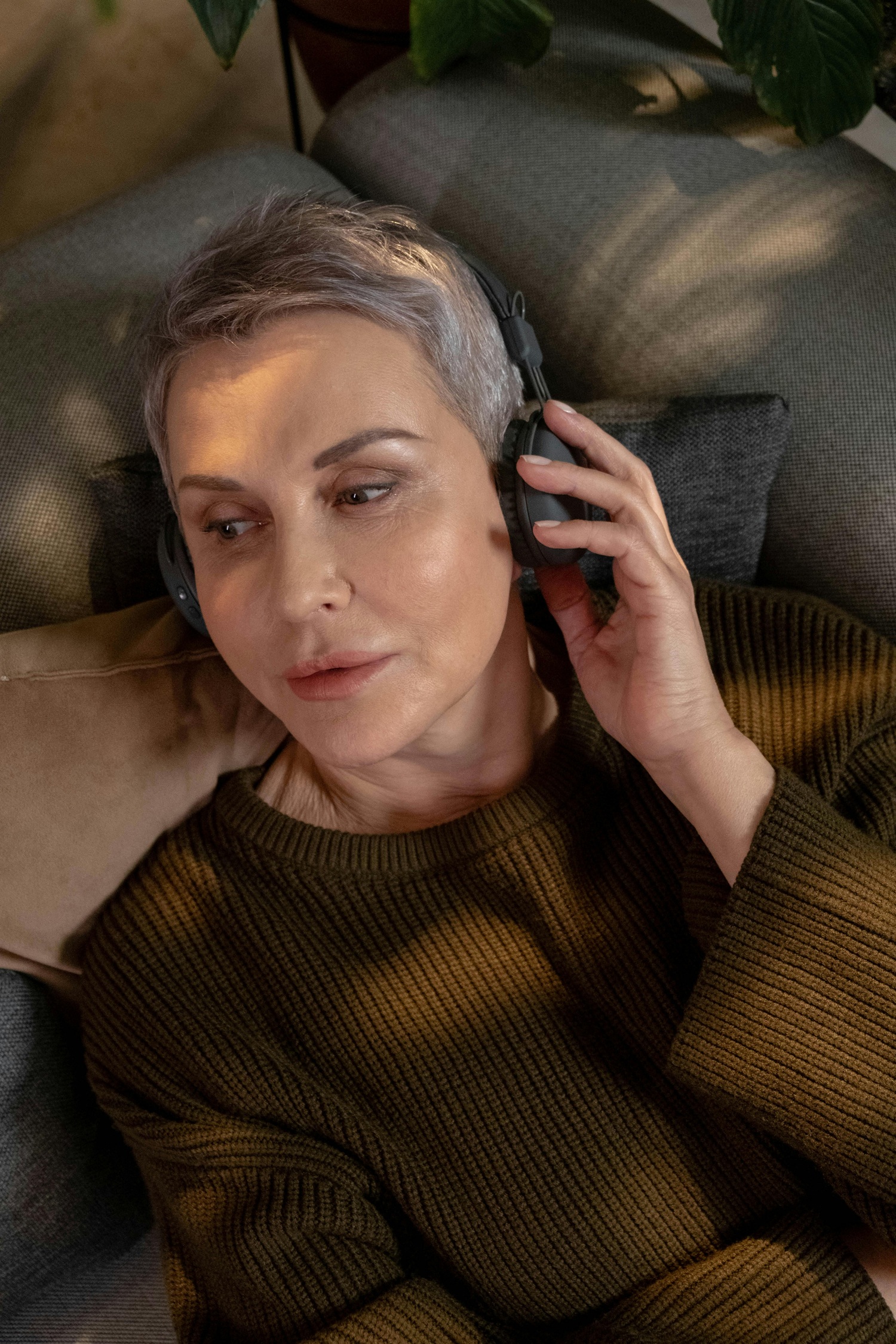
Music has always been an integral part of my life. But, even though my tastes in music have fluctuated considerably over the years, never has it become as vital to me as it did at menopause. My symptoms were severe, conventional therapies didn’t help much, so in addition to a healthy diet and regular exercise, listening to relaxing music turned out to be a great option for relief.
For some menopausal women, including postmenopausal women like me, music can be instrumental to the management of symptoms. A daily dose of music to unwind, if only for just 15 minutes, can help reduce stress, anxiety and depression, and it can improve sleep quality. As well, its documented effects on brain chemistry can be useful to manage mood and boost the body’s immune system.
The non-pharmaceutical stress-reducing effect
In 2013, the CBC released a health report on how music as medicine has enormous possibilities. The report was based on a large-scale review co-authored by Daniel Levitin and Mona Lisa Chanda, two psychologists at Montréal’s McGill University.
Levitin contributed the following comments for the CBC’s report: ‘I think the promise of music as medicine is that it’s natural and cheap, and it doesn’t have the unwanted effects that many pharmaceutical products do’. He further noted that ‘the idea that music has positive health effects is no longer controversial, and it has become accepted in the medical community.’
Based on my experience, chilling music can help with hormonal balance in menopausal women, and I believe it could be as beneficial to others in various settings. As a matter of fact, I’ve noticed lately how some doctors and dentists have put the medical use of music into practice at their clinics to make clients and patients feel less apprehensive about examinations and treatments.
Doctors Robert Bouclin and Charles Tremblay are Ottawa periodontists who know the value of carefully selecting background music for their practice. They maintain that ‘instrumental only’ classical and popular music is more conducive to a calming environment for their patients, and members of their staff appreciate their choice.
Stores and restaurants have also tapped into the benefits of well-chosen music played in the background. According to a 2015 CBC News report, researchers from Western Kentucky University found that customer turnaround is much faster when loud bassy music with lots of tempo changes is playing. Conversely, softer and familiar music, regardless of the type and tempo, has the upside of customers staying longer in a retail environment, and spending more.
Fast forward to June 2023, Global News reported on research done by Tony Kiang, an Alberta clinical pharmacology professor, indicating that music might help to improve the effects of drugs. Dr. Kiang said that his study is ‘a very good proof-of-concept study and, if it can be determined how music affects metabolic pathways, that information could be tailored to patients and their medications.’
The Global News report featured a clip about a weekly music program at the Montréal Cancer Centre that began before COVID hit. For an hour each week, patients can take a pause from the stress associated with their disease and treatment through the healing power of classical, jazz and popular music. As it happens, the patients’ families and the healthcare workers also find the concerts restful and soothing.
If music can be that influential in these settings, imagine its potential mind-over-body effect on anxiety triggered by hot flashes!
Emotional effect of music
In an interview I once watched online, singer songwriter Kenny Loggins said that if he was able to connect emotionally to his own lyrics for a new song, he knew it would be a hit. I remember thinking at the time that all great songwriters must rely on that strategy for success. Once Brandi Carlile puts a haunting melody to lyrics for a song, I’m guessing she probably knows instinctively how it will resonate with fans.
I enjoy listening to soothing music every day on my walks through my community or on my treadmill if the weather is not ideal. It’s pleasurable while working in the kitchen and at meal and bed times, too. My favourite genres are classical, soft rock, blues and jazz, but lately, I am getting good vibes from the smooth funk, R&B and soul music from newcomer artists and bands who have put a contemporary spin on the sounds of the 70s and 80s. I find it all amazing, especially the decompressing sounds of artists like the band Meltt of Vancouver, New Zealand’s Leisure or Pastel Radio of Australia. These artists are masterful young rockers who will likely maintain relevance and staying power because their music appeals to the masses.
Great music for a happy life
For me, well-crafted songs with meaningful lyrics can trigger emotions and wonderful memories about times and places I never want to forget. The added bonus is the immediate calming effect.
It seems to me that all comforting music known to have the power to heal is worth exploring for whatever ails you, including menopause, and several women I have talked to in recent weeks are in agreement. For years, some of them have been using tranquil music and sound as effective approaches to achieve inner peace and hormonal balance, whether it be for themselves or at their place of business.
Music adapted to nature sounds works wonders for the clients of massage therapist, Lianne Wouda at Optimize Physio and Sport Medicine in Ottawa. Lianne believes that her choice of soothing soundscapes can only enhance the massage experience by promoting physical and mental repose to release muscle tension, lower blood pressure and reduce anxiety.
‘Sound baths’ sessions at yoga and wellness centres are another wonderful option to amplify relaxation. At her studio, Julie Rollwagen of MountainGoat Yoga in Barrhaven (Ottawa), has been offering ‘sound healing’ workshops and events for over 10 years. For her specialty classes, crystal bowls, chimes, gongs, tingshaws, drums and a myriad of other instruments are used to create a soothing and peaceful environment. Additionally, the resonant vibrations from the instruments work on a cellular level to balance energy, calm the nervous system and quiet the mind. This sounds so good to me, I am tempted to sign up for a session!
*In Toronto, key venues for sound baths sessions include crystal bowl sessions at Kiko Sounds, restorative sessions at Yoga Kawa, and hammocks at Jungle Flower Wellness.
Final thoughts
Although relaxing music is not a cure-all, Canadian research has shown that it can significantly decrease cortisol (the stress hormone), while increasing oxytocin (the social bonding hormone), which is helpful to boost emotional well-being. As such, music with the potential to comfort is a powerful tool to promote wellness throughout menopause and beyond.
Lise Cloutier-Steele is an Ottawa writer and the author of the 2025 Edition of There’s No Place Like Home: A guide to help caregivers manage the long-term care experience, available from www.ottawacaregiver.com.