


The information provided in this article does not replace your relationship with your personal family physician.
Honestly, it doesn’t matter what drug you may be contemplating for relief from any health issue, including menopause, all have side effects. Doctors may say that you must weigh the benefits against the risks, and that is true. But, if you listen to televised commercials about prescribed medications, at the end of which the side effects listed are so numerous, it makes one think that any benefits would be far outnumbered by the risks.
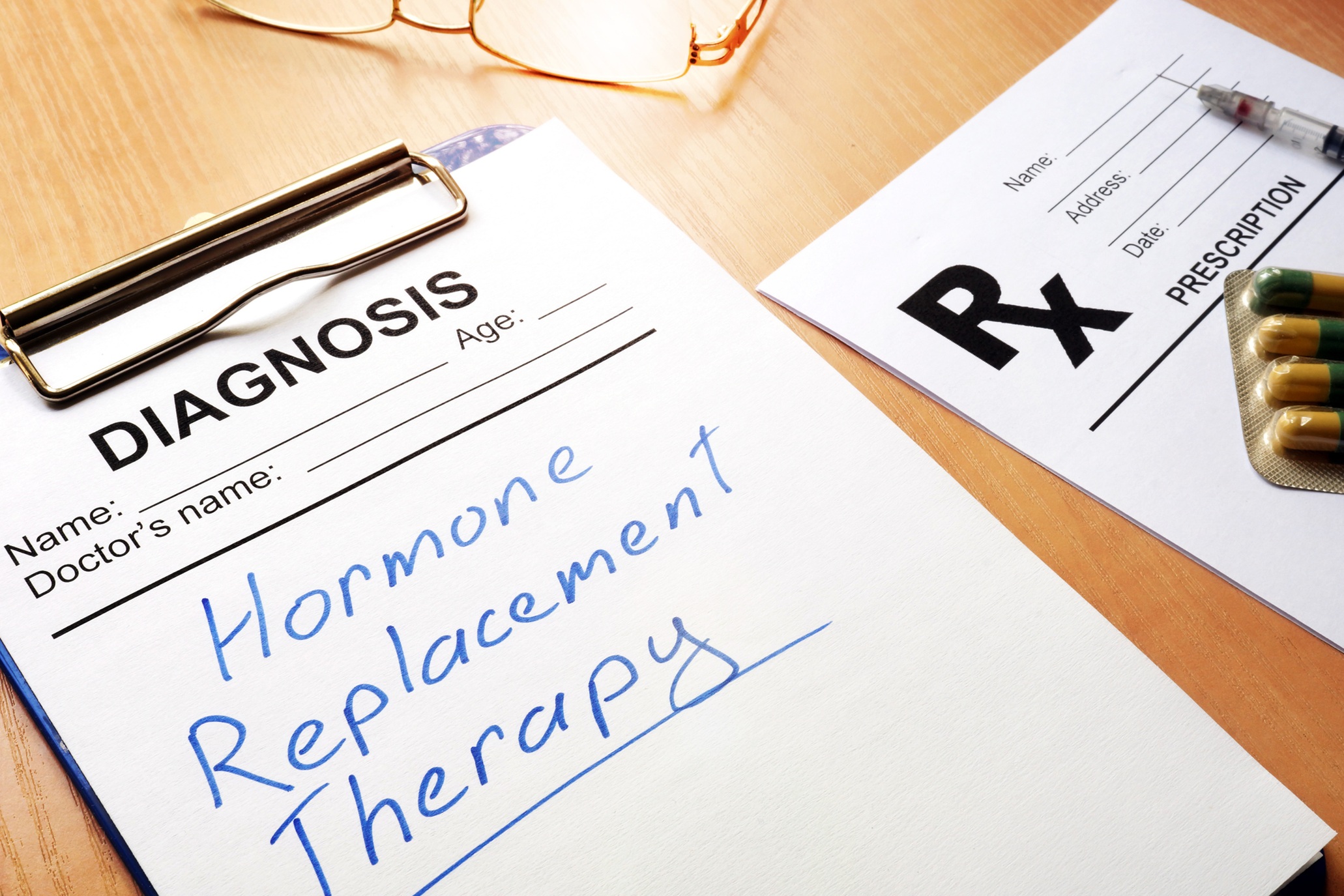
All the more reason for women to conduct their own research to help them make informed decisions about hormone replacement therapies (HRT). For further guidance, an appointment with a family physician could be beneficial.
Who would consider HRT and when?
Among the most compliant users of HRT are likely women under the age of 60 once they’ve begun to experience menopausal symptoms, or women like me, who were catapulted into menopause at an even younger age following the surgical removal of their uterus and ovaries, a procedure referred to as a hysterectomy and oophorectomy. Both groups might be seeking relief from symptoms such as hot flashes, night sweats, mood swings, sleep issues and vaginal dryness, and each one of these discomforts can have a significant impact on quality of life.
As a woman who underwent an unnecessary hysterectomy and oophorectomy procedure in 1991, at the age of 38, I can attest to the resultant more violent symptoms of menopause. I can also say with confidence that the procedure was unnecessary because the surgical and pathology report I requested from the hospital revealed that all my reproductive organs were healthy.
On its 2025 copyrighted website, The Canadian Cancer Society explains that even though the symptoms of surgical menopause are the same as the symptoms of natural menopause, they may be more severe because they happen very quickly. Adding to my difficulties with the many post-surgery negative impacts I experienced, the estrogen therapy I was prescribed did nothing to relieve me of the hot flashes and night sweats affecting every aspect of my everyday life at the time.
Generally, women begin experiencing perimenopause starting in their late 30s to early 50s. During the transition period referred to as perimenopause, the fluctuation of hormones produced by a woman’s ovaries will cause irregular menstrual cycles, and for some, the start of hot flashes, sleep issues and mood swings. This period normally lasts anywhere from 4 to 8 years, but it can stretch up to 14 years for some unlucky women.
Women will reach menopause when they haven’t had any menstrual periods for a period of 12 consecutive months. The average age for some menopausal women is 51 or 52 and between 45 and 55 for others.
The postmenopausal stage, however, starts immediately after menopause, and it will last for the rest of a woman’s life.
For some, a prescription for HRT is a quick-fix for greater control over the perimenopausal or menopausal experience, while others might consider more natural solutions that come with fewer risks. It’s what I had to do.
Notably, women who may not be suited for HRT are those who have previously experienced breast cancer, blood clots in their legs, lungs or brain, suffered a heart attack or have an active condition of liver or gallbladder disease.
Types of HRT
HRT medications are prescribed to replenish a woman’s natural hormone production which tends to diminish during the transition from perimenopause to menopause.
In Canada, these can be prescribed as estrogen only, or as a combination form of estrogen and progesterone. They come in various forms such as pills, patches, gels, creams and vaginal inserts.
Some of the key products are distributed by the following manufacturers: Estradiol Derm patches by Sandoz Canada; Lupin-Estradiol tablets by Lupin Pharma Canada Limited; Estragel by Organon Canada Incorporated; Activelle tablets by Novo Nordisk Canada Inc.; Estradot and Estallis patches by Novartis Pharmaceuticals Canada Inc. and Premarin and Prempro tablets and vaginal creams by Pfizer Canada. For women who experience low libido, several pharmaceutical companies market and distribute Health Canada-approved testosterone products.
Premarin was presented to me as my only option at the start of my surgical menopause. It’s an oral therapy made from a mixture of conjugated equine estrogens extracted from the urine of pregnant mares – hence the name ‘pre-ma-rin’. It might not be as popular as it was 25 years ago, however, it is still available in Canada where pregnant mare urine farms (PMUs) remain in operation in the provinces of Manitoba and Saskatchewan, under contract to the pharmaceutical company Pfizer.
What I didn’t know, at the time, was that Premarin can cause rapid weight gain. Though women are now encouraged to report weight gain while on this form of therapy, my reports fell on deaf ears for a period of three years, throughout which I gained an average of 20 pounds per year. I spent most of my forties living as a recluse, eating less than 1,000 calories per day while my weight kept climbing.
I decided to switch from the Premarin tablet to the combined bioidentical hormones of estrogen and progesterone. This treatment came in the form of a cream that I applied to my wrists daily, hoping for weight loss. No such luck, but once a doctor recommended that I wean myself off all forms of hormonal therapies, the weight finally started to come off.
Like Premarin, Prempro is available as an oral tablet, but it is a combination therapy made of conjugated estrogens (also extracted primarily from the urine of pregnant mares) as well as medroxyprogesterone acetate. Weight gain is possible with Prempro, and I was surprised at the claims that it is considered an uncommon side effect. Given my experience, I wouldn’t bet big money on that assumption.
Bioidentical hormones are commercially available in well-tested and Health Canada-approved prescription drugs. These contain estrogen, progesterone and other hormones duplicating those produced by the body, and they are synthesized in a chemical laboratory.
But the ‘custom compounded’ bioidentical combination therapies, prepared by a compounding pharmacist, do not have Health Canada-approval as there is no scientific evidence on the good or bad effects of these preparations on the body.
Oddly enough, it was a prescription for the custom compounded bioidentical hormones of estrogen and progesterone that gave me the best relief from hot flashes and night sweats. Even though I had to drive from Ottawa to Toronto to fill my prescription, I remained on this form of therapy for a year or two. It didn’t eliminate all of my symptoms; it just made some of them more tolerable.
U.S. plans to remove safety warnings on HRT for menopause
On November 10, 2025, anti-vax activist Robert F. Kennedy Jr., Secretary of the U.S. Health and Human Services, announced that the Food and Drug Administration (FDA) he oversees would be asking pharmaceutical companies to remove most ‘black box’ safety warnings used on medications, including hormone replacement therapies.
Following Kennedy’s announcement, CNN reported extensively on that decision. Some experts praised the change claiming it was correcting outdated information based on flawed studies – in particular, the exceptionally large and comprehensive U.S. government-funded study, the Women’s Health Initiative (WHI) of 2002. This study had enrolled 161,000 postmenopausal women in clinical trials, and concluded that compared to the study participants who took a placebo, women on estrogen pills after menopause could be at a higher health risk of uterine and breast cancers, as well as strokes and blood clots.
According to CNN’s Health Report of November 10, 2025, it was as a result of the 2002 WHI study that warning label changes were made to hormone products to warn patients of their risks and side effects. The new labels caused a subsequent drop of more than 70% in prescriptions for HRT because doctors became reluctant to prescribe them.
Dr. JoAnn Manson, chief of preventive medicine at Brigham and Women’s Hospital of Boston, Massachusetts, and one of the original investigators on the WHI study, now claims that the removal of the black box safety warnings is long overdue.
But the problem with this reasoning is that there were other significant studies and reports published at around the same time as the WHI study. Given that their findings were comparable to those of the WHI study, does it mean that they were all flawed?
For example:
- The 2002 International Position Paper on Women’s Health and Menopause involved scientists from Sweden, Switzerland, Italy and Australia, who concluded that the risks linked to estrogen had been minimized and its benefits overstated. In addition, this paper stated that the preventive powers of estrogen replacement therapy were not as great as the drug companies had claimed, and that the risks of heart disease, Alzheimer’s, depression, urinary incontinence, and osteoporosis were all more significant.
- In 2003, the key findings of the Million Women Study (MWS) confirmed that there were significant side effects and health risks linked to HRT, specifically with combined estrogen-progestin treatment plans. Furthermore, the MWS concluded that there was a significant risk of incident and fatal breast cancer in women using combined HRT, increased risks of strokes and blood clots, increased incidence of ovarian cancer with long-term use of HRT, but a slight decrease in endometrial cancer with the combined therapy.
- Researchers from Leicester University of England studied a group of women who were 50 years old, and their study was published in the British Medical Journal in September 2004. They concluded that women who were free of menopausal symptoms should avoid HRT altogether due to the risk of breast cancer. According to these researchers, HRT for the primary prevention of chronic diseases in women free of menopausal symptoms was unjustified, with a net harm that increases with the baseline risk of breast cancer.
Though the findings of the BMJ study date back to 2004, they are in keeping with the recent comment made by Dr. Jennifer Howell, OB/GYN, of Duke University in Durham, North Carolina, on November 23, 2025. During the PBS News report, she said: ‘If you don’t have any symptoms, you do not need to take menopausal hormone therapy as it’s not generally recommended for health promotion.”
I believe that Dr. Howell’s comment goes to show that the results of a dated study can still have some value 21 years later.
Without exhaustive analysis and thorough research on how HRT products have been greatly improved over the years, should women considering these treatments dismiss the findings of previous studies, and rely solely on recent comments made by experts highlighting the drop in prescriptions for HRT since 2002?
Or the opinion of others, like Dr. Sanjay Gupta, American neurosurgeon and CNN’s chief medical correspondent, who stated the following in his November 18, 2025, podcast: ‘Bottom line, FDA is changing the warning. They’re getting rid of the black box. And this is huge news. This is a shift expected to give women more options for treatment and probably generate a flood of new prescriptions.’
In 1998, when the CBC’s The Nature of Things with David Suzuki aired a program on estrogens, Dr. Suzuki ended that show by saying: ‘We don’t know the extent of the pharmaceutical companies’ involvement in the prescription of estrogens, nor do we know enough about these drugs to be prescribing them as widely.’
His comments stuck with me at the time, because I’d never thought of the correlation between the pharmaceutical companies that manufacture drugs for profit, the doctors who prescribe them, and the huge market of unsuspecting female patients looking for relief from menopausal symptoms.
Dr. Suzuki’s comments are probably just as relevant today.
Canada’s position
While Health Canada hasn’t removed black-box warnings as the FDA is about to do over the next few months, Canadian HRT product information details risks, and recommends careful consultation with a healthcare practitioner for appropriate use. Consumers are advised to read labels carefully and report any adverse reactions.
During Question Period on October 2, 2025, our federal Health Minister, Marjorie Michel, said that Canada can no longer look to the U.S. as a source of reliable health and scientific information. According to The Canadian Press report, she said: ‘I cannot trust them as a reliable partner.’
Her statement gave me hope that Canada may not remove the safety warnings on HRT product labels.
Side effects associated with HRT products
Side effects will vary according to the type and dose of hormone therapies, and the trial-and-error process of finding the right medication and dosage can be frustrating.
Currently, Canada requires specific warnings on HRT products, including increased risk of heart attack, stroke, blood clots, increased risk of breast cancer, increased risk of ovarian cancer if the treatment is used for a period of over 5 years, risk of endometrial (uterine) cancer if estrogen is not used in combination with progesterone in women who still have a uterus, and cardiovascular risks like high blood pressure and fluid retention for testosterone products.
The risk of breast cancer linked to HRT is real, and one that I should have paid closer attention to. I had to have a lesion surgically removed from one of my breasts less than two years after I started ingesting Premarin daily. It was a frightening experience for me, especially during the time I had to wait for the results of the biopsy. Thankfully, the lesion was benign, and that result was likely the push I needed to start exploring safer alternatives to restore hormonal balance. A blessing in disguise, I suppose.
The Canadian Cancer Society lists the following additional common side effects to general hormone therapies: fatigue, nausea and vomiting, diarrhea, weight gain, loss of interest in sex, hot flashes and night sweats caused by estrogen dominance, mood swings, depression, anxiety, breast swelling and tenderness, muscle or joint pain, osteoporosis, fertility problems and tumour flare reaction (TFR). (TFR is defined as an increase in a lesion size related to a treatment.)
Alternatives to hormone therapies
Although hormone imbalances can have a significant impact on quality of life, it’s not a death sentence, and hormones can be healed.
A friend and colleague once told me that the human body is a marvelous creation with the remarkable capability to heal itself. I might not have been completely convinced of that when she said it to me, but I believe it’s what prompted me to transition to an anti-inflammatory diet and lifestyle. The benefits have been numerous, I must admit, including relief from most of my menopausal symptoms.
To this day, I rely on evidence-based/plant-based nutrition as recommended by Dr. Michael Greger, founder of www.nutritionfacts.org and author of ‘How Not to Die’, ‘How Not to Diet’ and ‘How Not to Age’. Dr. Greger also addresses menopause and hormonal imbalances in his books and on his website.
- Cutting down on caffeine, alcohol and spicy food reduces the intensity of hot flashes, while regular exercise, stress management, mindful meditation and breathing exercises can help menopausal women achieve a quiet awareness and inner peace.
- Herbal allies such as Black Cohosh for hot flashes, Dong Quai and Chaste Tree Berry for hormonal harmony are worth a try.
- For more hormonal healing options, acupuncture and naturopathic medicine can help you thrive through menopause and beyond.
Keep in mind that managing menopause is doable by making safe changes that feel right for you.
Lise Cloutier-Steele is an Ottawa writer and the author of Misinformed Consent: Women’s Stories about Unnecessary Hysterectomy, available from www.amazon.com, and the 2025 Edition of There’s No Place Like Home: A guide to help caregivers manage the long-term care experience, available from www.ottawacaregiver.com.