

The most interesting living rooms in 2026 have one thing in common: they look like somebody actually lives there.
After years of pristine minimalism, design is moving toward interiors that feel warmer, more personal and more useful.
Current designer forecasts point to sculptural furniture, richer woods, layered interiors and practical seating rather than rooms built around one rigid aesthetic.
Here are seven trends shaping the living room right now.
1. Modular sofas that adapt to real life
Modularity is becoming one of the strongest furniture stories of the year. The reason is practical. Living rooms increasingly serve multiple purposes, and homeowners want seating that can move with them rather than locking them into one layout.
A modular sofa can be expanded, separated or rearranged as the room changes. That flexibility is useful for renters, growing families and anyone who expects their next home to have a completely different floor plan.
Cozey is one of several contemporary furniture companies building entire seating systems around this idea, with modular collections that allow individual components to be configured in different ways.
2. Softer, more sculptural curves
Straight-lined modernism isn’t disappearing, but its edges are softening. Rounded backs, curved arms and organic silhouettes are bringing more movement to living rooms.
ELLE Decor‘s 2026 furniture forecast specifically identified sculptural curves as a major theme.
The trick is moderation. You don’t need a room full of curved furniture. A rounded sofa arm, oval coffee table or sculptural chair is often enough to break up a room dominated by straight architectural lines.
3. Warm neutrals replace flat gray
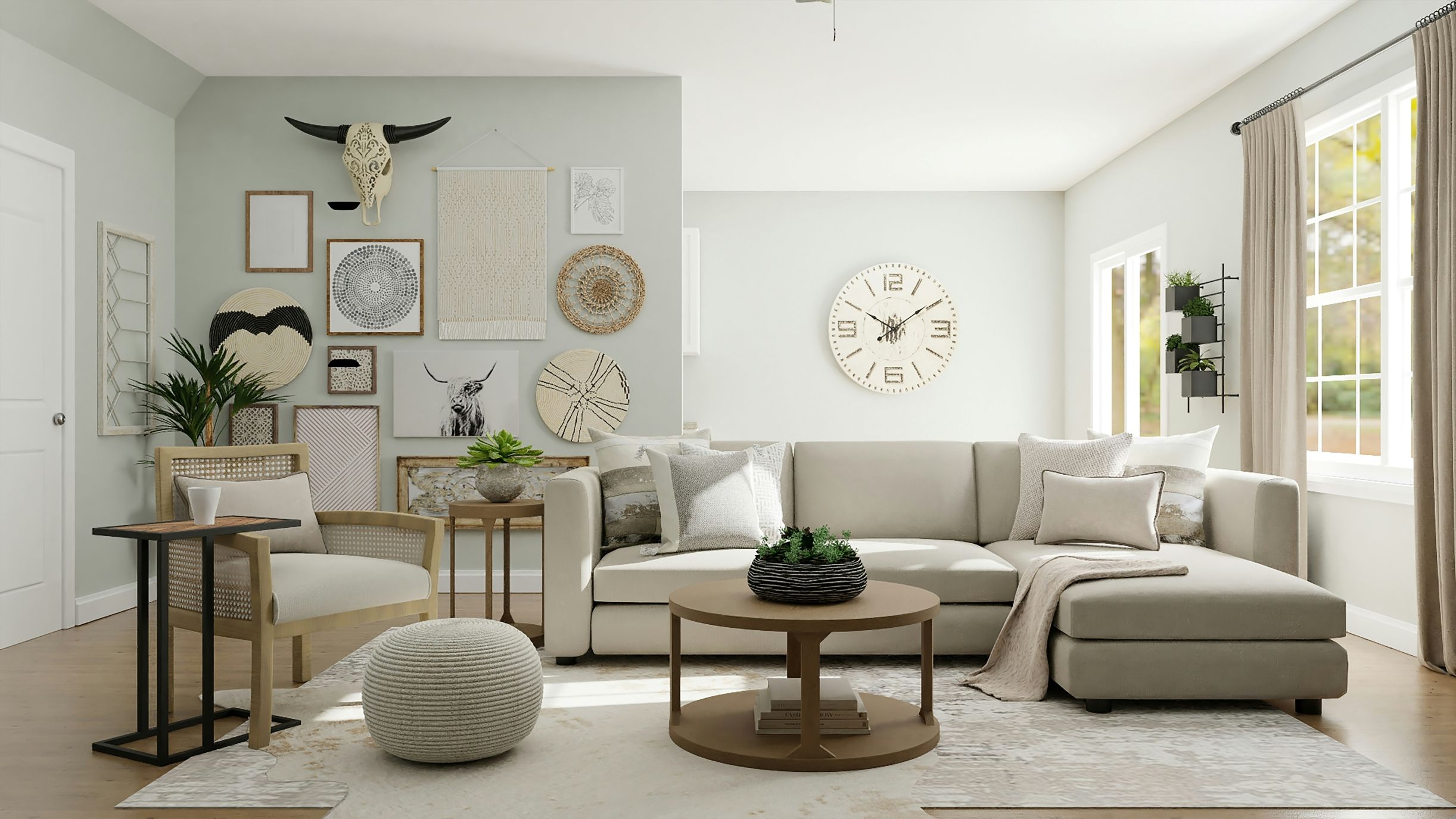
Neutral living rooms are not going away. But neutral no longer automatically means gray. Cream, sand, mushroom, camel, muted taupe, warm brown and earthy green are producing softer environments with more depth.
This works particularly well on large pieces such as sofas because warm neutrals still provide flexibility while avoiding the coldness associated with some cooler gray interiors. Layering similar tones in different textures can make a room feel richer without relying on bold colour.
4. Performance fabrics become normal, not niche
There was a time when “performance upholstery” sounded like something intended for a hotel lobby. Not anymore. Families want furniture that looks sophisticated without requiring constant anxiety about spills, pets or children.
Designers surveyed for current sofa-trend coverage have identified performance fabrics as one of the most consistent client requests. The new generation of performance materials looks increasingly similar to conventional upholstery, including textured weaves, soft chenilles and velvet-inspired finishes.
The best interiors of 2026 aren’t precious. They’re designed to be used.
5. Storage hides inside the furniture
Homes need more storage, but nobody wants another cabinet in every corner. That is pushing storage inside furniture itself. Ottomans open to hold blankets. Beds incorporate drawers. Benches conceal shoes. Some modular sofas now include storage inside individual seats.
Cozey’s Atmosphere range, for example, offers hidden storage modules within its modular seating system, demonstrating how functionality can be integrated without turning the furniture into a visibly utilitarian object. This is particularly valuable in condos and smaller homes where every square foot matters.
6. Living rooms are becoming layered again
Matching furniture sets are giving way to rooms assembled over time. That may mean mixing an inherited wood table with a modern sectional, a vintage lamp with new artwork, or polished furniture with handmade objects.
Homes & Gardens’ 2026 furniture coverage similarly points toward richer, layered and more individual spaces rather than perfectly coordinated sets. The result is a room that feels collected rather than purchased in one afternoon.
7. Comfort becomes visible
Perhaps the most important shift is that furniture is beginning to look comfortable again. Deep cushions, generous upholstery, relaxed silhouettes and tactile materials are all part of the movement away from interiors designed primarily for photographs.
A sofa can still be sculptural. It can still feel contemporary. But increasingly, buyers also want to sink into it. This may sound obvious, but it represents an important change in priorities. The living room is reclaiming its original job. It is becoming a room for living.
The best trend is flexibility
Trends are useful because they reveal broader changes in how people want their homes to feel. But designing an entire room around whatever is fashionable this year is rarely a good long-term strategy.
The strongest ideas from 2026 are not really about a particular colour or sofa shape. They are about flexibility. Furniture that adapts. Materials that tolerate real life. Rooms that combine old and new. And interiors that reflect the people who live in them rather than a single design rule.
Those ideas will likely last much longer than one trend cycle.