

In the early years of our relationship, I would often say to my now husband that our home needed real art to make it more inviting. So, we started going to art galleries over weekends, and although admiring artworks always turned into a wonderful experience, we didn’t buy. As a matter of fact, I was the one who was more reluctant to buy, knowing I could probably paint something myself for much less, or at least I thought I could. To that, my husband would say: “What are you waiting for, then?”
It’s not as easy as it looks
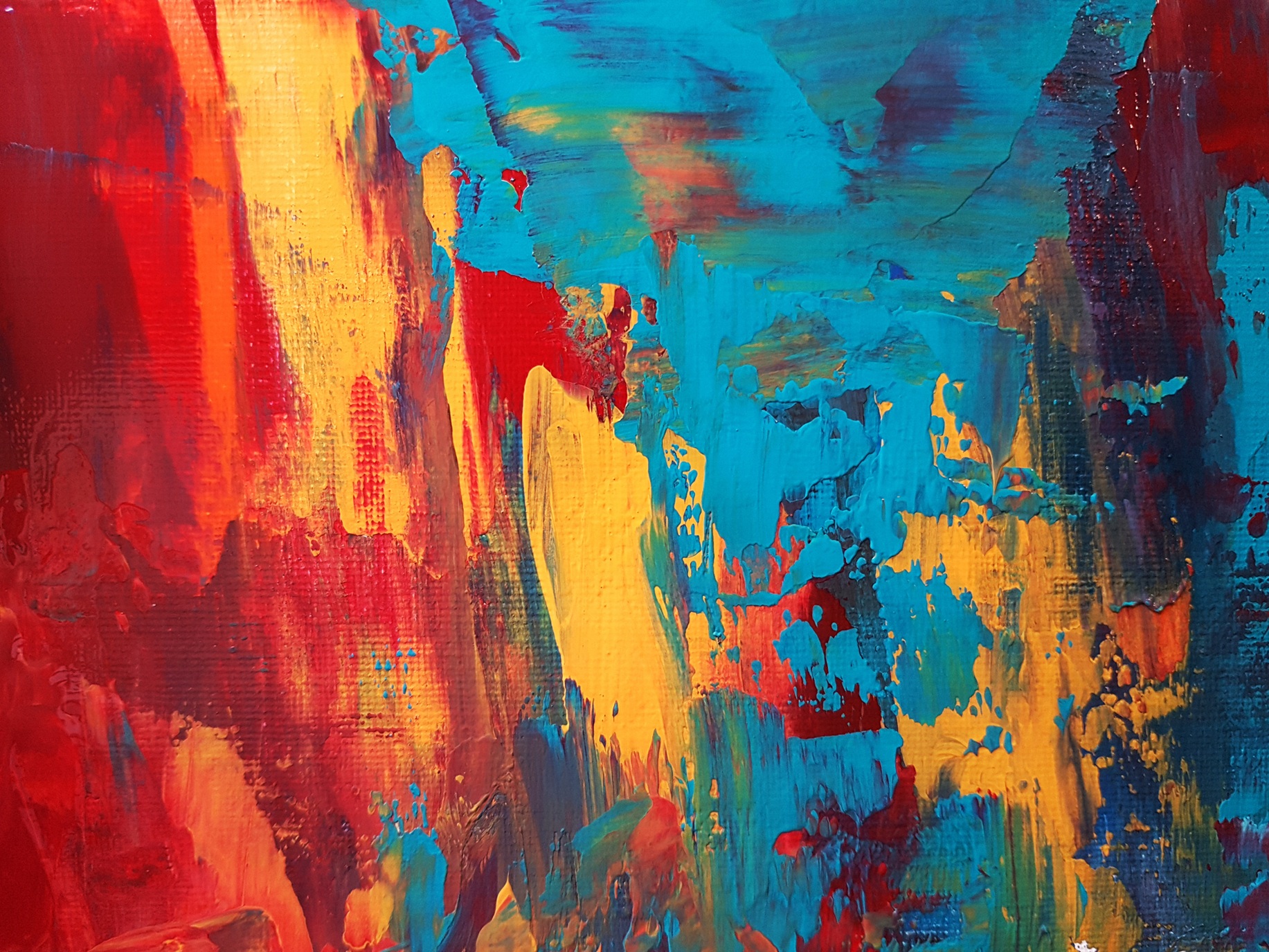
Throughout my education, art classes were my favourite. I had inspiring teachers, especially in high school, and I painted at home at every opportunity. I painted with oils only, and I remember how my canvases took ages to dry, but there was nothing like the joy of expressing myself with colour using mostly knives, and the odd wide brush. Abstract was in, and it was a positive outlet for my creativity. At a certain point though, work and family took precedence, and painting for enjoyment, and relaxation, had to take a backseat. That continued to be the case for over 40 years!
Experts claim that any type of simple creative activity can significantly lower stress, even if you don’t have artistic talent. But for me, getting back to painting proved to be nerve-wracking. I don’t know if it was my fear of not being able to produce art worthy of hanging on a wall in our home, or if it was merely a lack of motivation. In any event, what I do know for certain, is that creating art on canvas is not always easy. If it was, everybody would be doing it.
It took a while before I found the courage to sign up for art classes at the Ottawa School of Art, but it was the right decision for a couple of reasons: firstly, because I opted for the most forgiving medium of acrylic painting to build up my confidence, and that it did. Secondly, the class gave me the opportunity to learn something new from paint professor, Blair Thomas Paul, whose paintings looked masterful, and breathtaking to me. I thought if I was to learn anything, it might as well be from someone with real talent, and a reputation in the art world.
I enjoyed listening to Blair talking about the history of art, and eavesdropping on his constructive criticism of other students’ artworks. I learned as much from his many helpful tips for everyone as I did from his advice on my own efforts. It took several canvases before my dabbles resulted in a painting worth framing, and what a thrill it was for me when that happened.
The book idea
I was late for Blair’s art class one Sunday afternoon, having stopped in at the Gordon Harrison Gallery beforehand. Harrison’s gallery was two streets over from the Ottawa School of Art, and it featured his original oil paintings of Canadian landscapes. I was hoping to buy his book after reading about it in our local paper that morning. Sadly, I did not have the budget for any of Harrison’s paintings or his book.
Once I explained to Blair why I was late, he said he had always wanted to put together a book about his art, but didn’t know how he could go about it. Without having given it any thought whatsoever, I told him he was in luck because I could help him do it!
Driving back home that afternoon, I couldn’t help but worry about what I had gotten myself into. I was not an accomplished artist; I knew very little about art except for what I remembered from school, which wasn’t much. Besides, getting to print with any book project is no easy feat, and that much I knew from my experience with the print products I worked on over the years.
After a few high-stress days, and sleepless nights, I came up with the idea to contact an academic publisher for whom I had worked as a publicist for one of his authors. I remembered the fine art collection throughout this publisher’s home, and so I wondered if he would be interested in an art book featuring Blair’s autobiography, and the history of his works in images.
The idea I pitched was for the publication of a book in a colourful magazine format to be sold at Blair’s shows. The stars were clearly aligned in his favour that week because a day later, the publisher was onboard, and we began working together on his book shortly after. Blair did the writing, and I managed the rest, which included editing, marketing of the project by way of contributions and reviews by experts, and promotions for the launch. Two years later, Blair had a book to hold in his hands, and several promotions to trigger sales. It was a noteworthy project, and one I was proud to have worked on.
Creative works don’t sell themselves
Whether you are a writer or an artist, your work doesn’t end with a concluding sentence or the last stroke of a brush on a canvas. If you feel that your completed work can be of benefit to others, and was meant to be shared, then you must do all you can to promote it by contacting friends, family, contacts you worked with in the past, and media specialists who can help you on that journey. I particularly enjoy making the transition from writing to promoting a book or an article. It can be fun connecting with others who share your interests.
More importantly, you must never give up on marketing strategies to keep a book or artwork in view. Well-designed websites, from which individuals can make direct purchases are ideal, and regular updates to contacts can also be beneficial.
Blair Thomas Paul continues to excel at marketing his work, and re-inventing himself to stay current through art classes and exhibitions. There are times when his strategies can be especially rewarding, as was the case with the 19 paintings of his impressions of the war in Ukraine that he donated to the Embassy of Ukraine in 2022. Recently, in February, 2026, fifteen of those paintings were exhibited on easels at a ceremony hosted by The Canadian War Museum to mark the fourth year of the war in Ukraine. It had to be a great honour for him, and if you go to www.blairpaul.com, you can watch videos about these paintings, and view images of his many other works.
Art for the soul and mind
Though I don’t do it often enough these days, going to an art gallery can be healing. I can marvel at the talent of artists, regardless of their style and era, and it often reminds me that I should make more time for painting again. If you don’t worry too much about what the end product will look like, painting has a way of calming the mind, lowering stress, and it can be therapeutic as well.
I think I just talked myself into working on a painting when Old Man Winter rolls around in a few months from now.
Lise Cloutier-Steele is an Ottawa writer and the author of the 2025 Edition of There’s No Place Like Home: A guide to help caregivers manage the long-term care experience, available from www.ottawacaregiver.com.